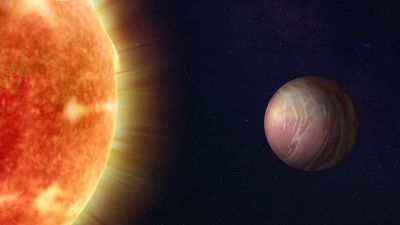
TOI-431 b: Unveiling the Mysteries of an Ultra-Hot Super-Earth
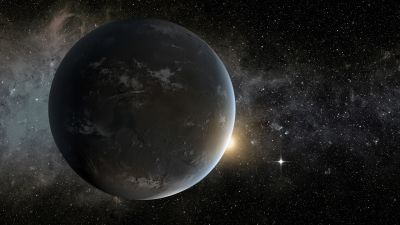
Explore the latest JWST findings on TOI-431 b, a super-Earth with potential atmospheric evidence.
Tag
All Space Telescope Blog posts tagged spectroscopy.
Explore the latest JWST findings on TOI-431 b, a super-Earth with potential atmospheric evidence.
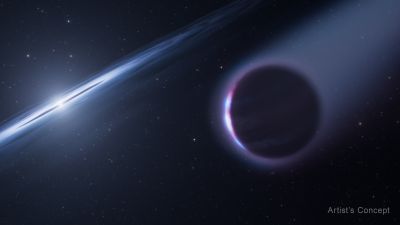
TOI-561 b, a lava world 280 light-years away, reflects 75% of its starlight, suggesting a silicate cloud-covered atmosphere.
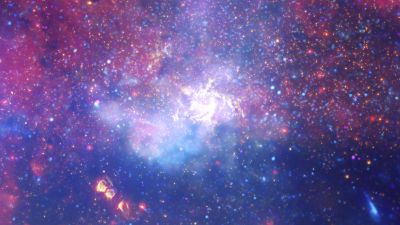
The JWST/MIRI MRS has mapped the Galactic Center Minispiral, revealing enriched ionized gas and fast-moving clumps near Sgr A*, the supermas...
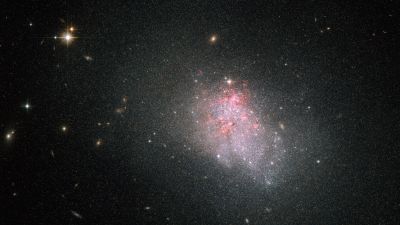
A recent study using Hubble spectroscopy finds that supernova-driven winds in starburst galaxies block rather than facilitate Lyman continuu...
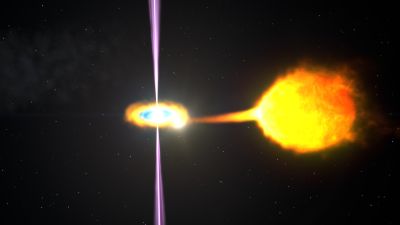
A recent XMM-Newton study reveals that the iron lines in Centaurus X-3 pulse in sync with the neutron star's spin, indicating a persistent a...
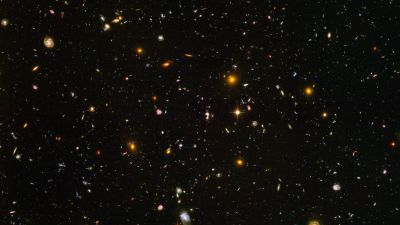
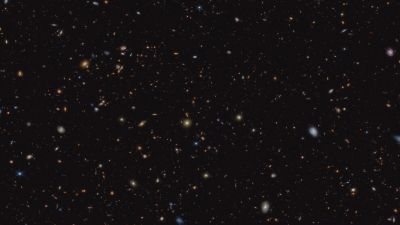
The JWST/NIRSpec has detected an unexplained single emission line in the Hubble Ultra Deep Field, challenging astronomers with its origin.
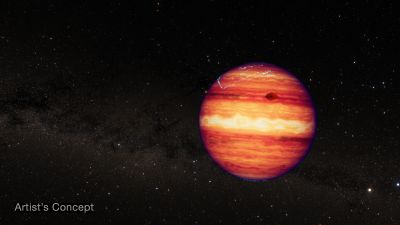
The James Webb Space Telescope reveals complex weather patterns on the brown dwarf SIMP 0136, highlighting temperature swings and cloud dyna...
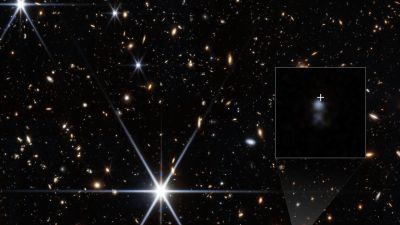
FRB 20240304B, detected by MeerKAT and pinpointed by JWST, challenges existing theories about fast radio bursts with its unexpected host gal...
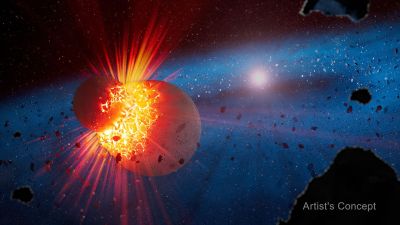
The Webb Telescope's survey of extreme debris disks reveals insights into planet-shattering collisions and their role in planetary formation...
Hubble's archival data uncovers a Jupiter-sized second-generation planet orbiting the white dwarf HS 0209+0832, shedding light on planetary...
Hubble's archival data reveals a second-generation planet orbiting the white dwarf HS 0209+0832, shedding light on planet formation from ste...
The James Webb Space Telescope's observations reveal metal-enriched outflows in galaxies just 500 million years after the Big Bang, reshapin...
Google Preferred Sources
Choose Space Telescope as a preferred source to make our mission news, visual reporting, and independent explainers easier to find in Google Search.