Unraveling a 1999 Archival Cold Case
In a remarkable twist of astronomical detective work, scientists have revisited archival data from the Hubble Space Telescope to uncover a planetary enigma surrounding the white dwarf HS 0209+0832. Originally observed in 1999, the spectra from Hubble hinted at unusual elemental abundances that puzzled astronomers for decades. Now, thanks to a team led by the University of Warwick, this stellar mystery has been cracked open, revealing the presence of a second-generation planet.
The Niobium Signature and Heavy-Element Abundances
The key to this discovery lies in the peculiar spectral lines of niobium and other heavy elements detected in the atmosphere of HS 0209+0832. These elements are not typically found in such abundance in white dwarfs, leading scientists to investigate further. The presence of niobium suggests that material from a disintegrating planetary body is being accreted onto the star, a hypothesis that aligns with the notion of a second-generation planet.
Corroboration from FUSE and TESS
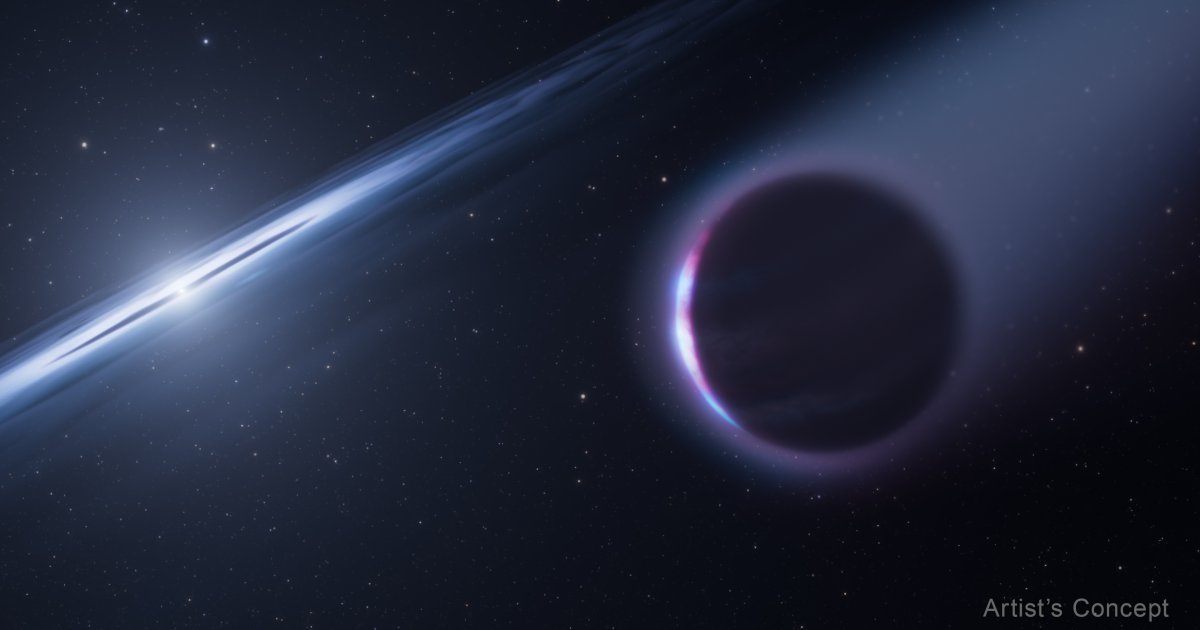
Further evidence supporting this hypothesis comes from observations by the Far Ultraviolet Spectroscopic Explorer (FUSE) and the Transiting Exoplanet Survey Satellite (TESS). FUSE data provided additional insights into the chemical composition of the white dwarf's atmosphere, while TESS observations helped identify periodic dimming events consistent with a planet orbiting close to the star. Scientists estimate that this planet, roughly the size of Jupiter, orbits at a distance of about 6 million kilometers from HS 0209+0832.
The Warwick-Led Nature Astronomy Result
The groundbreaking study, published in Nature Astronomy, was spearheaded by a team from the University of Warwick. Their analysis of the archival Hubble data, combined with contemporary observations, paints a compelling picture of a planet formed from the remnants of a dead star. This discovery not only solves a long-standing astronomical puzzle but also provides a fascinating glimpse into the lifecycle of planetary systems.
Implications of a Planet Born from a Dead Star's Ashes
The existence of a second-generation planet around HS 0209+0832 challenges conventional theories of planet formation. Typically, planets form from the protoplanetary disk of gas and dust surrounding a young star. However, in this case, the planet appears to have formed from the debris left behind after the star exhausted its nuclear fuel and collapsed into a white dwarf. This finding opens new avenues for understanding how planets can arise in post-main-sequence stellar environments.
For more detailed information, you can explore the NASA Science and ESA Hubble pages.