Introduction to TOI-561 b
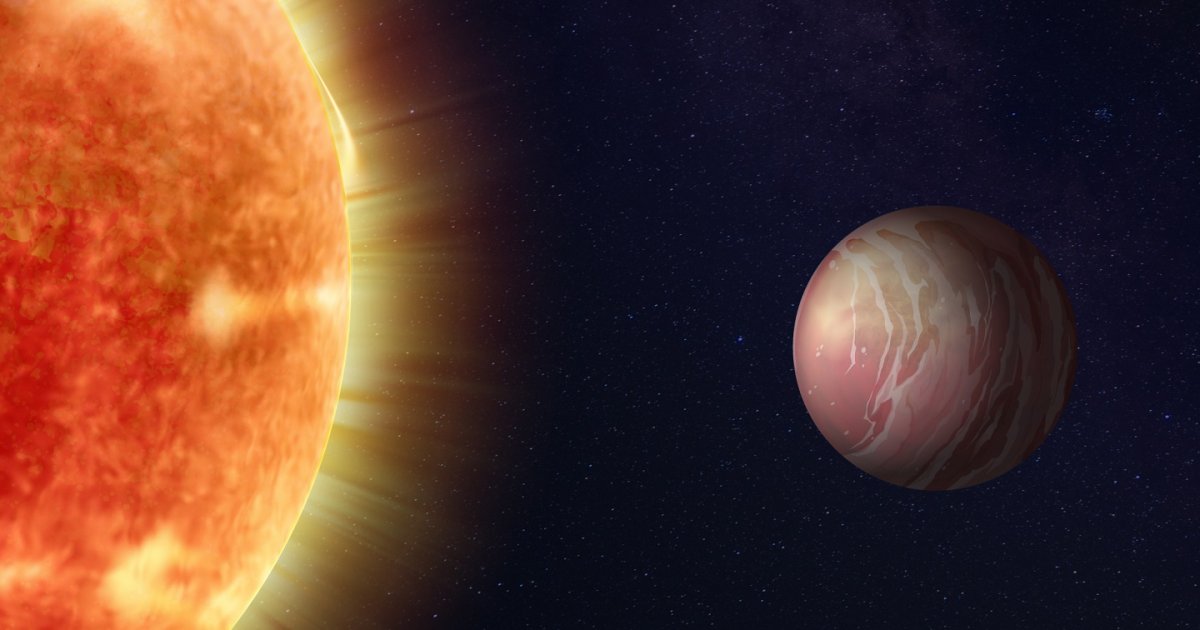
TOI-561 b is an intriguing exoplanet located approximately 280 light-years away from Earth. This celestial body has captured the attention of astronomers due to its unique characteristics, which challenge our understanding of planetary atmospheres. Recent observations using the James Webb Space Telescope (JWST) and its Near Infrared Spectrograph (NIRSpec) have revealed that TOI-561 b reflects about 75% of the starlight it receives, a phenomenon reminiscent of Venus in our own solar system.
Reflective Properties and Atmospheric Composition
The high reflectivity of TOI-561 b suggests the presence of an atmosphere dominated by reflective silicate clouds, primarily composed of silicon dioxide (SiO2) and magnesium silicate (MgSiO3). Such a reflective atmosphere is surprising for a lava world, which is typically expected to have a bare, rocky surface. The presence of these clouds indicates that TOI-561 b does not fit the standard model of a barren, molten exoplanet.
JWST/NIRSpec Observations
The JWST's NIRSpec instrument played a crucial role in this discovery. Over the course of 37 hours, nearly four orbits of the planet were observed, allowing scientists to construct phase curves that detail how the planet's brightness changes as it orbits its star. These observations were critical in determining the planet's albedo, or reflectivity, which is among the highest observed for a rocky exoplanet. The findings were published in The Astronomical Journal by researchers Boucher, Dang, and Piette.
Implications for Atmospheric Dynamics
The reflective atmosphere of TOI-561 b implies that it possesses a dynamic system capable of distributing heat across its surface. This is contrary to the expectation that a lava world would have a stark temperature contrast between its day and night sides. Instead, the presence of silicate clouds suggests a mechanism for heat transfer, possibly through atmospheric circulation, which helps to moderate temperatures across the planet.
Comparison with Venus
TOI-561 b's reflective properties draw a parallel to Venus, known for its thick cloud cover that reflects a significant portion of sunlight. However, unlike Venus, TOI-561 b's clouds are composed of silicates rather than sulfuric acid. This discovery opens new avenues for understanding how different atmospheric compositions can affect planetary climates and albedos.
Challenges and Future Research
The discovery of a reflective atmosphere on TOI-561 b challenges existing models of lava worlds and prompts further questions about the diversity of exoplanetary atmospheres. Future research will aim to understand the formation and stability of these silicate clouds and their role in the planet's climate system. Continued observations with JWST and other telescopes will be essential to unravel the complexities of this fascinating exoplanet.
For more information, you can read the original press releases from University of Birmingham and Science Daily.