Introduction to SIMP 0136
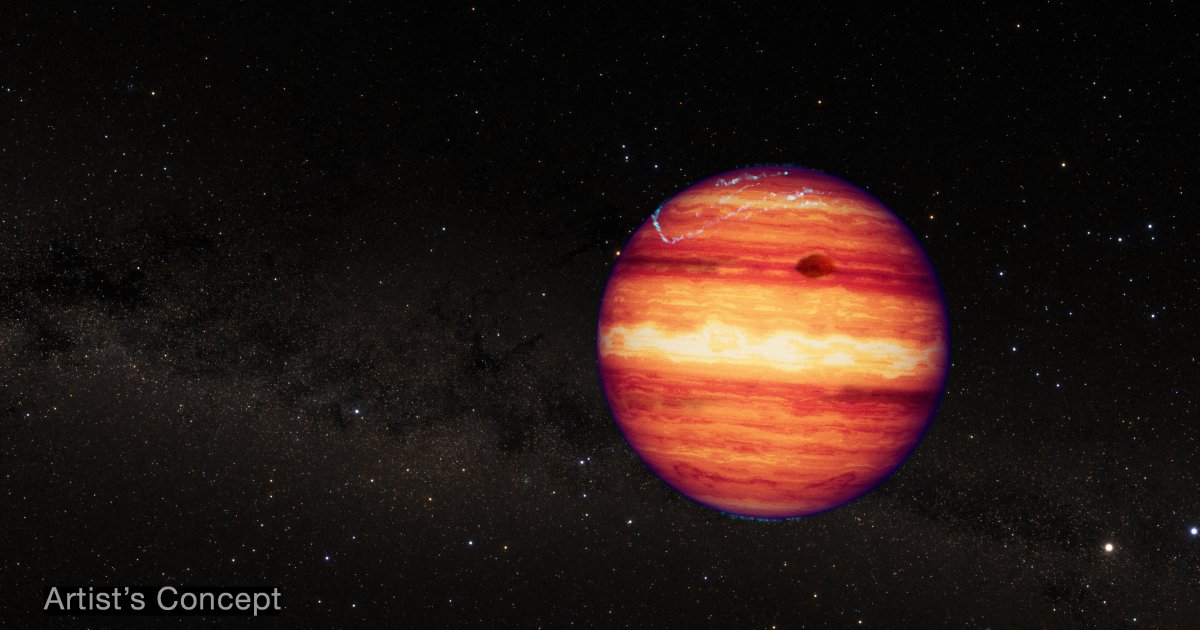
The James Webb Space Telescope (JWST) has provided groundbreaking insights into the atmospheric dynamics of SIMP J013656.5+093347 (SIMP 0136), a free-floating T2.5 brown dwarf located approximately 20 light-years away. This object, devoid of a host star, offers a unique laboratory for studying atmospheric processes in isolation. Recent observations by a team from Trinity College Dublin, led by Schrader and Vos, have leveraged JWST's NIRSpec PRISM time-series spectroscopy to uncover complex weather patterns on this enigmatic object.
Methodology: NIRSpec PRISM and Principal Component Analysis
The team employed the Near-Infrared Spectrograph (NIRSpec) on JWST to capture time-series data, which was then analyzed using principal component analysis (PCA). This method allowed researchers to distill the variability in the brown dwarf's atmosphere into two primary components: broadband temperature fluctuations and chromatic shifts resulting from changes in vertical cloud structure. These findings are detailed in a recent study on arXiv.
Broadband Temperature Swings
The first component identified by the PCA relates to broadband temperature swings. These variations are indicative of dynamic atmospheric processes, possibly driven by convective activity beneath the visible cloud layers. Such temperature changes could significantly affect the thermal emission of the brown dwarf, offering insights into its internal heat distribution and energy balance.
Chromatic Shifts and Cloud Dynamics
The second component involves chromatic shifts attributed to vertical changes in cloud structure. These shifts suggest that the clouds on SIMP 0136 are not static but undergo dynamic reorganization, possibly due to atmospheric circulation patterns or changes in chemical composition. This finding aligns with previous observations of cloud variability in brown dwarfs, as noted in Science Daily.
Three Recurring Atmospheric States
Through detailed spectral analysis, the team resolved the atmospheric data into three recurring states. These states likely represent different phases of cloud cover and atmospheric dynamics, providing a more nuanced understanding of brown dwarf weather patterns. While the exact nature of these states remains under investigation, they offer a framework for future studies on similar objects.
State 1: Clear Skies
In the first state, the atmosphere appears relatively clear, with minimal cloud cover. This state likely corresponds to periods of reduced atmospheric convection, allowing for a more unobstructed view of the brown dwarf's thermal emission.
State 2: Partial Cloud Cover
The second state is characterized by partial cloud cover, which could be indicative of transitional phases in the atmospheric dynamics. This state may result from the interplay between rising and sinking air masses, affecting the distribution and composition of clouds.
State 3: Dense Cloud Cover
The third state involves dense cloud cover, potentially driven by increased atmospheric turbulence or chemical reactions that promote cloud formation. This state could significantly alter the observed spectra, as clouds obscure the underlying thermal emission.
Implications for Brown Dwarf Studies
The insights gained from SIMP 0136 have broader implications for our understanding of brown dwarfs and their atmospheres. By revealing the dynamic nature of these objects, JWST's observations challenge previous assumptions of brown dwarfs as relatively static entities. Instead, they exhibit complex weather patterns akin to those found on giant planets, albeit on a different scale and under different conditions.
These findings also underscore the importance of high-resolution spectroscopy and advanced analytical techniques in unraveling the mysteries of substellar objects. As more data becomes available, scientists estimate that we will continue to refine our models of brown dwarf atmospheres, enhancing our understanding of these fascinating celestial bodies.