Introduction to Centaurus X-3
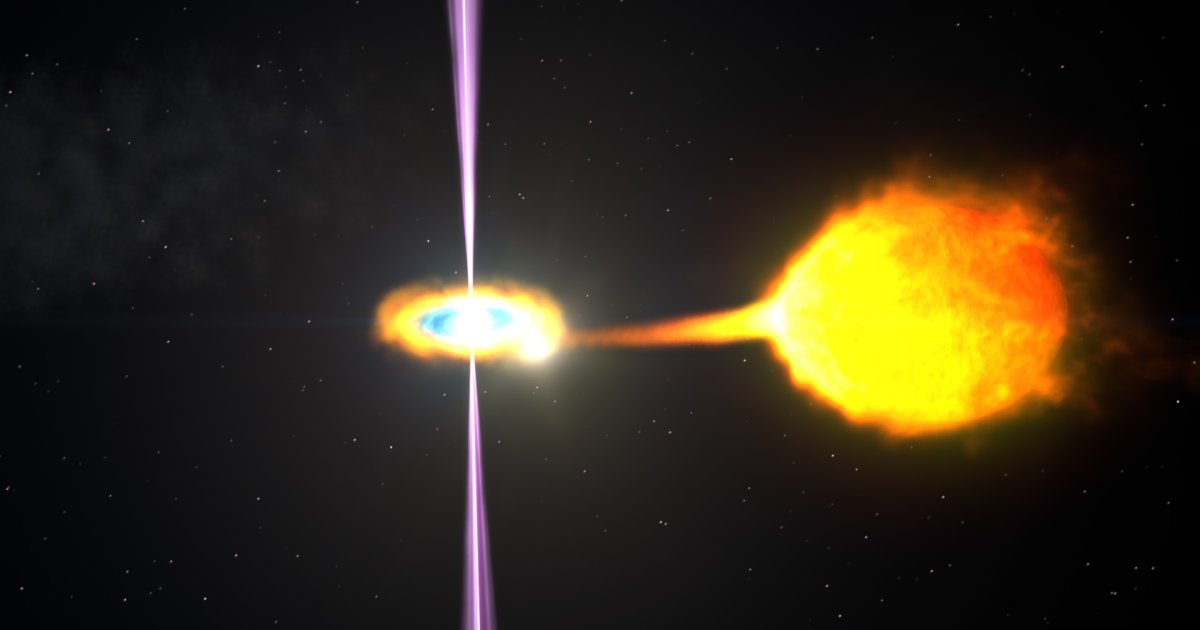
Centaurus X-3 is a well-known high-mass X-ray binary (HMXB) system, featuring a neutron star that accretes material from its massive companion star. This accretion process results in intense X-ray emissions, making Centaurus X-3 a subject of extensive astrophysical research. Recent observations using the XMM-Newton space telescope have provided new insights into the dynamics of this system, particularly regarding the accretion stream feeding the neutron star.
Recent Findings from XMM-Newton
In a study conducted by Roy, Manikantan, and Paul from the Raman Research Institute, published in October 2026, researchers utilized XMM-Newton's capabilities to perform a pulse-phase-resolved analysis of Centaurus X-3. This approach allowed them to observe how the iron emission lines—specifically Fe I 6.4 keV, Fe XXV, Fe XXVI, and Fe Kbeta—behave in relation to the neutron star's spin period of 4.805 seconds.
Iron Lines and Neutron Star Spin
The study found that these iron lines pulse in step with the neutron star's rotation, an indication that the accretion process is closely linked to the star's magnetic field and rotational dynamics. This synchronization suggests a stable and persistent accretion stream that is channeled along the magnetic field lines onto the neutron star's surface.
Implications of the Accretion Stream Discovery
The discovery of a persistent accretion stream in Centaurus X-3 has significant implications for our understanding of HMXB systems. It provides evidence supporting the theory that the material from the companion star forms an accretion disk around the neutron star, which is then funneled onto the star's magnetic poles. This process is responsible for the observed X-ray pulsations.
Such findings enhance our comprehension of the complex interactions between the magnetic field and accretion processes in neutron stars. The synchronization of iron line emissions with the neutron star's spin also offers a new method to probe the geometry and dynamics of the accretion flow in similar systems.
Future Research Directions
These findings open the door for further studies using both XMM-Newton and other observatories, like the Chandra X-ray Observatory, to explore the detailed mechanisms of accretion in neutron stars. Future research could focus on the variability of the accretion stream over longer periods and its impact on the neutron star's spin evolution.
Additionally, understanding the interplay between the magnetic field and accretion processes could provide valuable insights into the lifecycle of neutron stars and their role in the broader cosmic environment.
Conclusion
The XMM-Newton study of Centaurus X-3 has unveiled crucial aspects of the accretion stream dynamics in HMXB systems. By revealing the synchronization of iron line emissions with the neutron star's spin, this research not only enhances our understanding of neutron star accretion but also sets the stage for future explorations into the complex physics governing these fascinating cosmic objects.
For more detailed information, you can access the full study on arXiv and explore additional resources about XMM-Newton on the ESA website.