Introduction to the Mysterious Emission Line
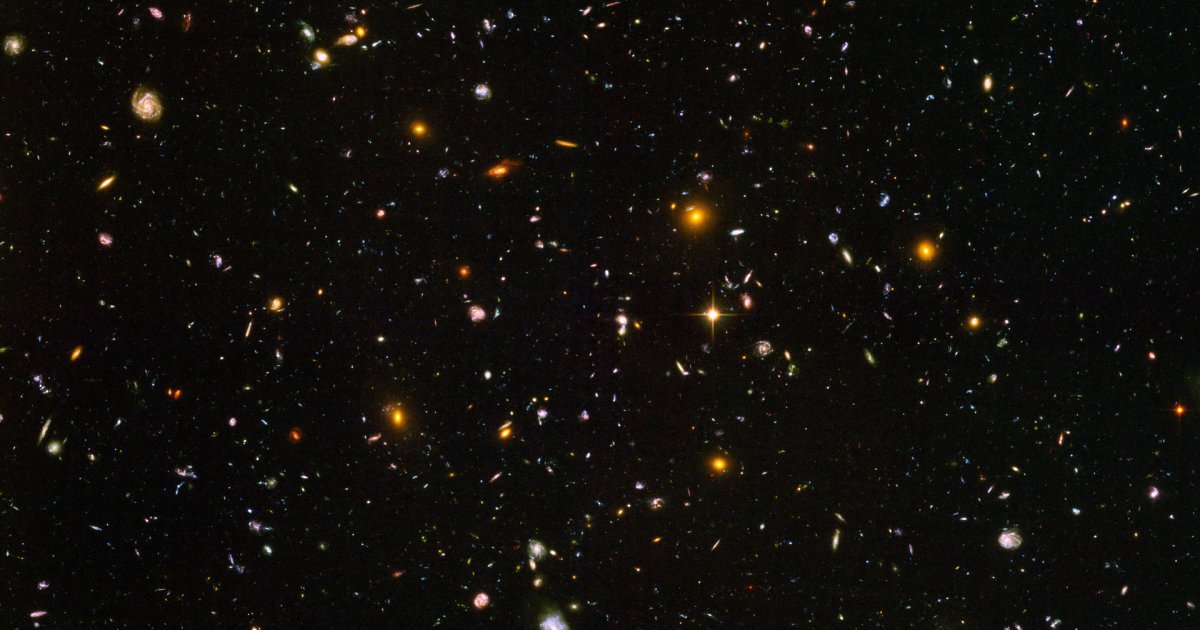
The James Webb Space Telescope (JWST) has been a cornerstone of modern astronomy, pushing the boundaries of our understanding of the universe. Recently, a team led by Huberty et al. (2026) reported an unexplained single emission line detected by the Near Infrared Spectrograph (NIRSpec) in the Hubble Ultra Deep Field. This discovery has sparked intrigue and debate within the astronomical community due to its enigmatic nature.
The MOCSS Methodology
The detection was made possible through the innovative Multi-Object Coronagraphy for Slitless Spectroscopy (MOCSS) method. This technique allows astronomers to observe a wide field of view while blocking out bright light sources, enabling the detection of faint emission lines. The MOCSS method is particularly effective in deep-field observations, where it can reveal objects that are otherwise invisible in direct imaging.
Details of the Emission Line
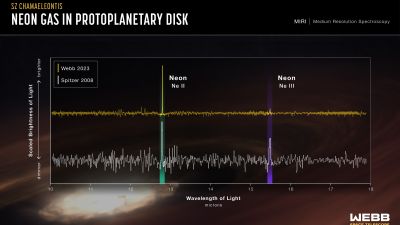
The emission line was observed at approximately 1.60 microns, a wavelength that falls within the infrared spectrum. This line was consistently detected across four dithers and two position angles, confirming its authenticity and ruling out instrumental artifacts. Despite extensive imaging data from both the Hubble Space Telescope (HST) and JWST, no corresponding object was identified in the deep-field images, making this detection even more puzzling.
Extreme Equivalent-Width Limit
One of the most striking features of this emission line is its extreme equivalent-width limit. Equivalent width is a measure of the strength of an emission line relative to the continuum emission of the source. The observed line's strength suggests a highly energetic process, yet no visible counterpart challenges our current understanding of such phenomena.
Potential Explanations: AGN vs. Transient Sources
The origin of this single emission line remains uncertain, with two primary hypotheses under consideration: active galactic nuclei (AGN) and transient astronomical events.
Active Galactic Nuclei (AGN)
AGNs are powered by supermassive black holes at the centers of galaxies, known for emitting strong radiation across various wavelengths. The detected emission line could potentially originate from an AGN, but the absence of a visible host galaxy in deep imaging complicates this explanation. It's possible that the AGN is obscured by dust or located in a region of space with unusual properties.
Transient Sources
Another possibility is that the emission line is the result of a transient event, such as a supernova or a gamma-ray burst. These events can produce intense emissions over short periods, which might align with the observed characteristics. However, the lack of any visible remnants or associated features in the imaging data makes this hypothesis equally challenging to confirm.
Conclusion
The discovery of this single emission line by JWST/NIRSpec in the Hubble Ultra Deep Field presents a fascinating puzzle for astronomers. While the MOCSS method has proven effective in detecting such anomalies, the lack of a clear counterpart in imaging data leaves the origin of this line open to speculation. Further observations and theoretical modeling will be crucial in unraveling this cosmic mystery.
For more information, you can explore the detailed findings in the original research paper and related discussions on the Institute of Physics website.