Introduction to M30 and Its Galactic Significance
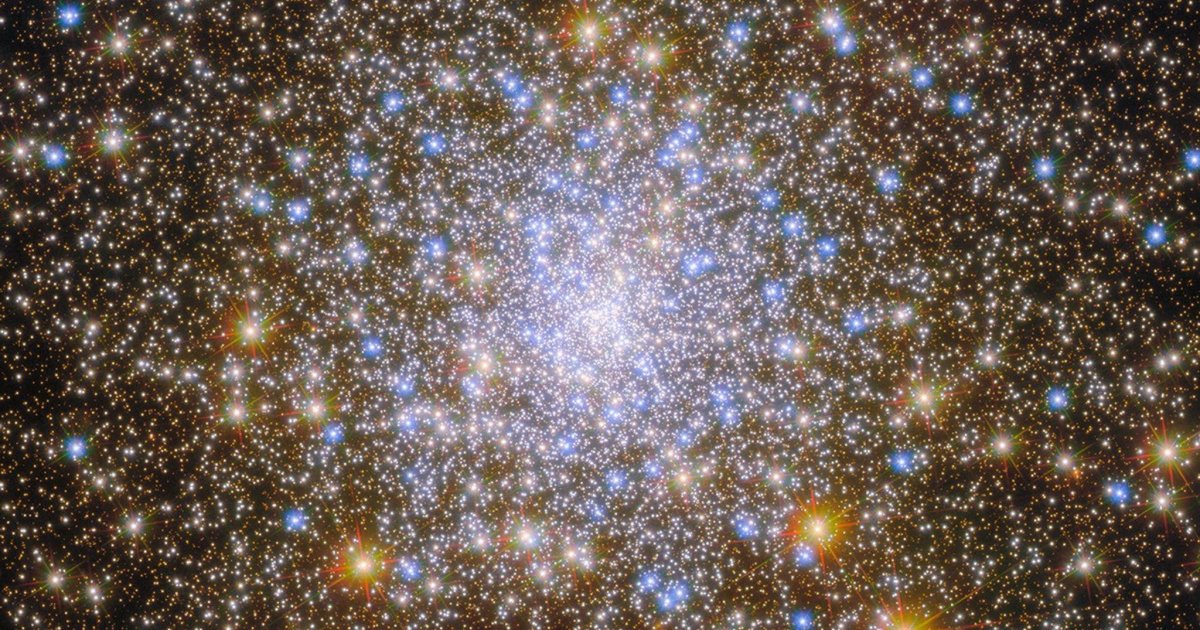
The Hubble Space Telescope's November 2026 Picture of the Month features the mesmerizing globular cluster M30 (NGC 7099), located approximately 27,500 light-years away in the constellation Capricornus. This celestial spectacle offers a unique window into the past, providing insights into the formation and evolution of our galaxy. Through the combined efforts of three Hubble programs utilizing the Advanced Camera for Surveys (ACS) and the Wide Field Camera 3 (WFC3), astronomers have uncovered fascinating details about M30's composition and history.
Revealing Blue Stragglers and Multiple Stellar Populations
One of the most intriguing discoveries within M30 is the presence of blue stragglers, stars that appear younger and hotter than their neighbors. These stars are thought to form through stellar collisions or mass transfer in binary systems, offering clues about the cluster's dynamic environment. The Hubble observations, spanning ultraviolet to near-infrared wavelengths, have allowed scientists to identify these enigmatic stars with unprecedented clarity.
Furthermore, the data reveal multiple stellar populations within M30, suggesting a complex formation history. These populations differ in age and chemical composition, indicating that M30 has undergone several episodes of star formation. Such findings are crucial for understanding the processes that shape globular clusters and their role in the broader context of galactic evolution.
Tracking 15 Years of Stellar Motions
Over the past 15 years, Hubble has meticulously tracked the motions of stars within M30, providing a dynamic view of the cluster's internal structure. This long-term study has enabled astronomers to map the orbits of individual stars and better understand the gravitational interactions at play. These observations are essential for piecing together the cluster's history and predicting its future evolution.
M30's Retrograde Orbit: Evidence of Galactic Capture
Perhaps the most intriguing aspect of M30 is its retrograde orbit around the Milky Way. Unlike most globular clusters that orbit in the same direction as the galaxy's rotation, M30 moves in the opposite direction. This unusual orbit suggests that M30 was not born within the Milky Way but was instead captured from a smaller galaxy that merged with our own. Such events are critical to the assembly of the Milky Way, providing evidence of its dynamic and tumultuous past.
The study of M30 and its retrograde orbit offers valuable insights into the processes of galactic archaeology, where astronomers piece together the history of galaxies by examining their constituent stars and clusters. By understanding these interactions, scientists can better comprehend the formation and evolution of the Milky Way and other galaxies in the universe.
Conclusion
Hubble's observations of M30 provide a remarkable glimpse into the past, revealing the complex history of this globular cluster and its role in the broader narrative of galactic evolution. The discovery of blue stragglers, multiple stellar populations, and the cluster's retrograde orbit underscores the importance of such studies in unraveling the mysteries of our universe. As we continue to explore the cosmos, M30 serves as a testament to the power of modern astronomy and the enduring legacy of the Hubble Space Telescope.
For more detailed information, you can visit the NASA Science page and the ESA Hubble site.