NASA's Strategic Request for Information
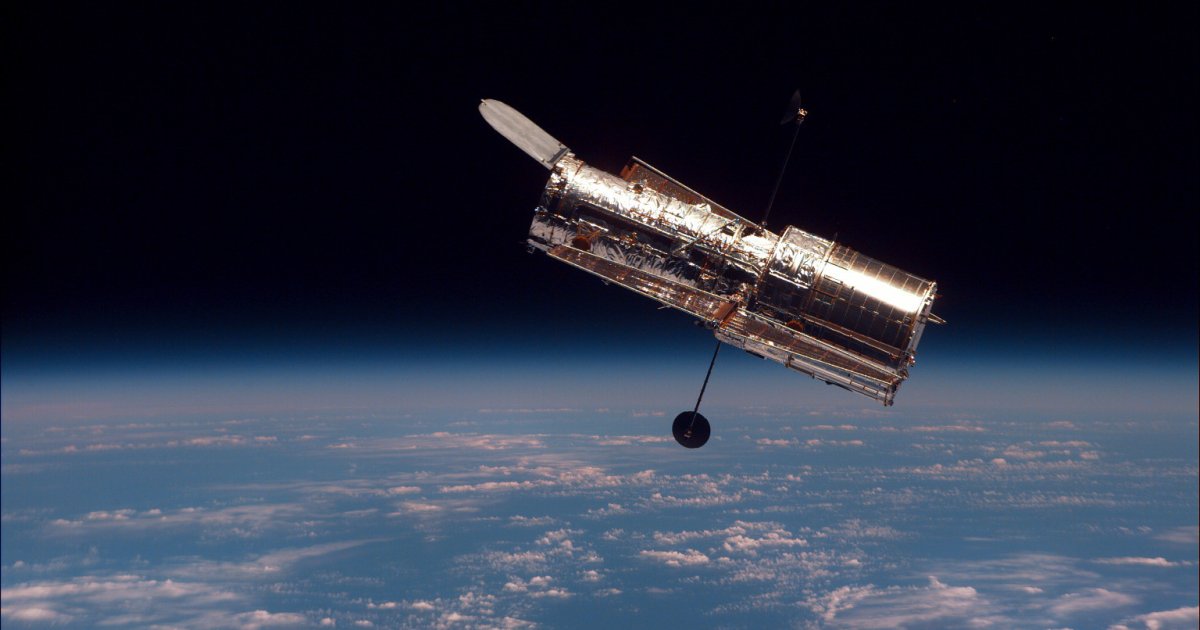
On October 29, 2026, NASA issued a Request for Information (RFI) inviting commercial entities to propose solutions for servicing or reboosting the Hubble Space Telescope. This initiative aims to address the challenges posed by Hubble's gradual orbital decay and ensure its continued scientific contributions. The RFI outlines three primary options: elevating Hubble's orbit, upgrading its capabilities, or executing a controlled reentry and disposal. Interested parties must respond by November 30, 2026.
Option 1: Raising Hubble's Orbit
One of the key objectives outlined in the RFI is to raise Hubble's orbit. Hubble carries no propulsion system of its own, so atmospheric drag steadily lowers its orbit - normal behaviour for any spacecraft in low Earth orbit, but irreversible without an external boost. By boosting its altitude, NASA aims to extend Hubble's operational lifespan beyond the projected reentry window of 2033-2034. The agency has set a deadline of 2032 for any boost mission to be completed to avoid the risk of uncontrolled reentry.
Option 2: Upgrading Hubble's Capabilities
Another option under consideration is upgrading Hubble's systems to enhance its scientific capabilities. This could involve installing new instruments or improving existing ones, thereby allowing Hubble to continue providing valuable data alongside newer telescopes like the James Webb Space Telescope. Such upgrades could potentially extend the telescope's utility and scientific output well into the next decade.
Option 3: Controlled Reentry and Disposal
As a last resort, NASA is also considering a controlled reentry and disposal of Hubble. This option would ensure that the telescope reenters Earth's atmosphere safely, minimizing the risk of debris. Controlled reentry would involve guiding Hubble to a specific location over the ocean, ensuring any remnants pose no threat to populated areas.
What NASA Leadership Has Said
NASA Administrator Jared Isaacman framed the request as a question of value rather than sentiment, saying that "Hubble still has important science ahead of it" and that the agency should look at "innovative and cost-effective ways to extend the life of an asset already on orbit." In his words, extending the observatory’s life would mean "more discoveries, more science, and more opportunities."
Nicky Fox, associate administrator for NASA’s Science Mission Directorate at NASA Headquarters in Washington, placed the decision in a longer context, describing Hubble as "a national icon that has fundamentally changed how humanity views our universe for more than 35 years." NASA has said it is eager to explore options for raising Hubble’s orbit in the time remaining before its anticipated re-entry, while development continues on the flagship observatory that will succeed it.
NASA stresses that none of the three options has been formally approved. The RFI is a market survey: it asks industry what is technically and commercially feasible, and the responses will inform whether a servicing or reboost mission is pursued at all.
Who Keeps Hubble Running
Hubble is an international project between NASA and the European Space Agency. NASA’s Goddard Space Flight Center in Greenbelt, Maryland manages the telescope and conducts mission operations, with support from Lockheed Martin Space in Denver. Science operations - the business of turning observing proposals into data and data into published results - are handled by the Space Telescope Science Institute in Baltimore, the same institute that runs science operations for the James Webb Space Telescope.
That division of labour matters for the RFI. Any commercial servicing mission would have to work with a spacecraft that was designed in the 1970s and 1980s and last touched by astronauts during Servicing Mission 4 in 2009. Hubble was built to be serviced, which is precisely why the option is on the table at all; no other great observatory in orbit today was designed with a grapple fixture and astronaut handrails.
Why Not Simply Retire It
Hubble and Webb are not interchangeable. Webb observes almost entirely in the infrared, while Hubble remains the only observatory delivering high-resolution ultraviolet and visible-light imaging and spectroscopy from above the atmosphere. Ultraviolet work in particular - hot stars, the intergalactic medium, auroras on the outer planets, the composition of exoplanet upper atmospheres - has no replacement currently in orbit or scheduled for launch. Losing Hubble in 2033 or 2034 would close that window for an indefinite period, which is the practical argument behind NASA’s interest in a boost.
Looking Ahead: The 2033-2034 Reentry Window
Hubble's projected reentry window of 2033-2034 underscores the urgency of NASA's RFI. Without intervention, the telescope's orbit will continue to decay, leading to an uncontrolled reentry. NASA's proactive approach in seeking commercial solutions highlights its dedication to preserving Hubble's legacy while ensuring safety and sustainability in space operations.
For more information on NASA's efforts to extend Hubble's mission, visit the NASA Science website and Science Daily.