Unveiling the Intricacies of Pa 30
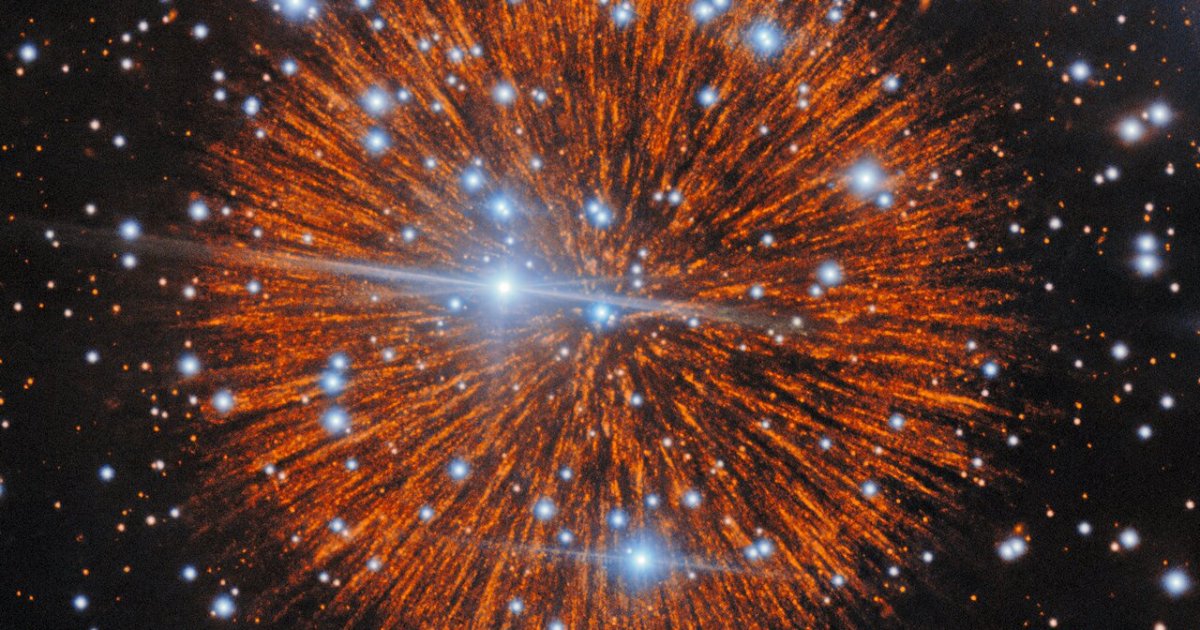
In a groundbreaking observation, the Gemini North telescope's GMOS instrument has captured unprecedented details of the supernova remnant Pa 30, associated with the historical SN 1181 event. This remnant, located approximately 7,500 light-years away in the constellation Cassiopeia, has revealed a complex tapestry of filamentary structures, significantly more intricate than previously observed. These structures, resembling chains of pearl-like knots, offer new insights into the aftermath of this rare Type Iax supernova.
A Rare Type Iax Supernova
SN 1181 is one of only a handful of supernovae recorded in historical texts, with observations documented by Chinese, Japanese, and Arabic astronomers in 1181 AD. Unlike the more common Type Ia supernovae, Type Iax supernovae are less energetic and result from the partial detonation of a white dwarf star. This incomplete explosion leaves behind a 'zombie' star, which continues to exist post-supernova.
The Surviving 'Zombie' Star
At the heart of Pa 30 lies the surviving remnant of the white dwarf, identified as IRAS 00500+6713. This 'zombie' star is notable for its extreme characteristics, including a surface temperature of approximately 200,000 degrees Celsius and winds exceeding 16,000 kilometers per second. The precise centering of this star within the remnant suggests a remarkably symmetric explosion, with minimal 'kick' imparted to the star during the supernova event.
Historical Records and Modern Discoveries
The supernova of 1181 AD was one of the few such events recorded in historical annals. Chinese and Japanese astronomers noted its appearance in the sky for over 185 days, while Arabic records also mention this celestial event. The new observations from Gemini North not only corroborate these ancient records but also enhance our understanding of the physical processes involved in such rare stellar explosions.
Implications for Stellar Evolution
The detailed imaging of Pa 30's filamentary structure provides crucial data for astrophysicists studying the life cycles of stars. The 'firework' rays, now understood to be composed of pearl-like knots rather than smooth streaks, indicate a complex interaction of shock waves and stellar material. These findings offer a unique opportunity to study the dynamics of supernova remnants and the role of Type Iax supernovae in the broader context of stellar evolution.
For more details, you can read the full press release from NOIRLab and explore the scientific study published in The Astrophysical Journal.