Introduction to EP250704a
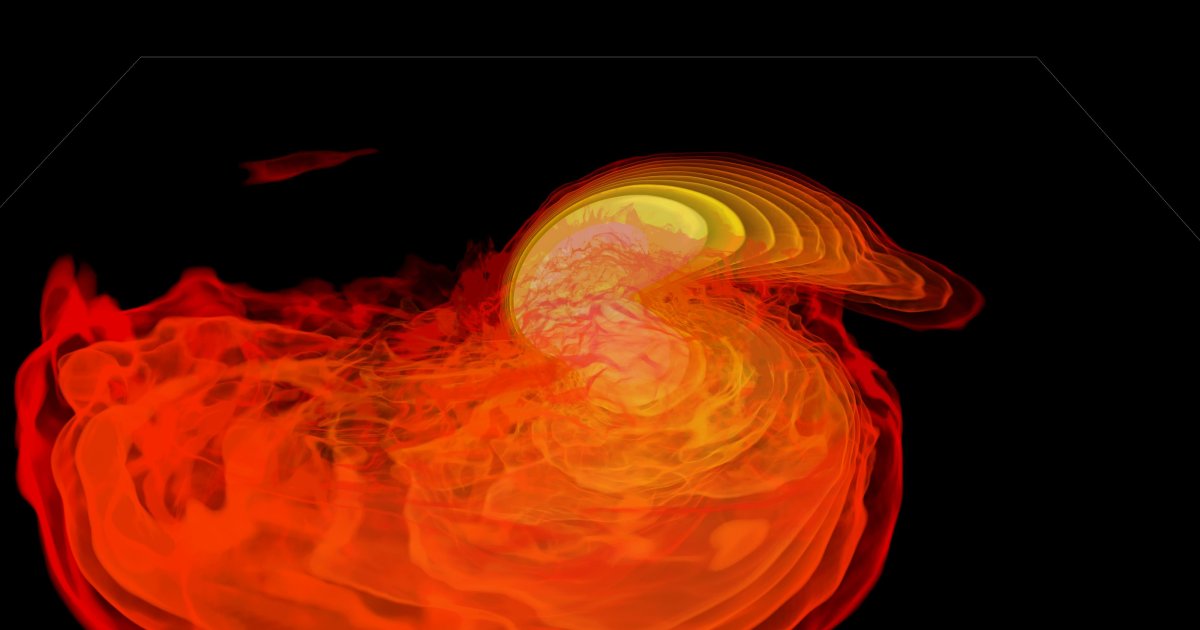
In a groundbreaking observation, the Einstein Probe, SVOM, and Insight-HXMT have captured a significant event in the cosmos: the longest prompt soft X-ray flash yet seen from a compact-object merger, designated EP250704a. This event, occurring at a redshift of z=0.661, was characterized by a short gamma-ray burst (GRB 250704B) lasting only 0.5 seconds, followed by an extended soft X-ray emission lasting approximately 10 minutes. This phenomenon provides new insights into the aftermath of neutron star mergers and the potential birth of a magnetar.
The Significance of the Long X-ray Tail
The extended soft X-ray emission observed in EP250704a offers a unique glimpse into the processes following a neutron star merger. Typically, such mergers are expected to produce a kilonova, a bright optical and infrared emission resulting from the radioactive decay of heavy elements. However, in this case, no supernova was detected, suggesting an alternative outcome.
The presence of a prolonged X-ray tail implies that the merger resulted in the formation of a highly magnetized neutron star, or magnetar, rather than collapsing directly into a black hole. This conclusion is supported by the fact that the energy released in the X-ray tail is consistent with the rotational energy of a newly formed magnetar. Scientists estimate that the magnetic fields in such objects can be over a trillion times stronger than Earth's magnetic field, leading to intense electromagnetic emissions.
Implications for Astrophysical Research
The detection of EP250704a's long X-ray tail has significant implications for astrophysical research. Traditionally, compact-object mergers have been primarily detected through gravitational wave observations, as demonstrated by the LIGO and Virgo collaborations. However, the ability to identify such events through their X-ray emissions offers a complementary method that could enhance our understanding of these cosmic phenomena.
Moreover, this discovery opens new avenues for studying the properties of magnetars and the conditions under which they form. The absence of a supernova in EP250704a challenges existing models of neutron star mergers and suggests that magnetar formation might be more common than previously thought.
Future Prospects and Observations
The observation of EP250704a underscores the importance of multi-wavelength and multimessenger astronomy. By combining data from X-ray, gamma-ray, and gravitational wave observations, scientists can obtain a more comprehensive picture of compact-object mergers. This approach will be crucial for future missions and telescopes aimed at understanding the universe's most energetic events.
As technology advances, the sensitivity and range of instruments like the Einstein Probe and Insight-HXMT will improve, potentially leading to more frequent detections of similar events. This will not only aid in the study of magnetars but also in the broader quest to map the cosmic web and understand the distribution of matter in the universe.
Conclusion
EP250704a represents a pivotal moment in the study of compact-object mergers. The extended soft X-ray emission provides compelling evidence for magnetar formation, challenging existing paradigms and offering new methods for detecting these elusive events. As we continue to explore the cosmos, such discoveries will undoubtedly pave the way for a deeper understanding of the universe's most mysterious phenomena.