Understanding Ocean Glint on Exoplanets
Recent research by Cornish & Robinson, as detailed in their paper on arXiv (2609.04597), explores the potential of detecting ocean glint signatures on Earth-like exoplanets. This study is pivotal for advancing our understanding of habitability beyond our solar system.
Specular vs. Lambertian Reflection
Ocean glint occurs when sunlight reflects off a planet's surface, specifically its oceans, at certain angles. This reflection can be categorized into two types: specular and Lambertian. Specular reflection is mirror-like, where light reflects at a single angle, while Lambertian reflection scatters light in many directions. The presence of specular reflection is a strong indicator of liquid surfaces, such as oceans, on exoplanets.
The Role of the rfast Tool and the Cox-Munk Ocean Model
Cornish & Robinson utilized the rfast tool in conjunction with the Cox-Munk ocean model to simulate and analyze these reflections. The Cox-Munk model, originally developed to study Earth's oceans, helps predict how light interacts with ocean waves, providing a framework to identify glint signatures in exoplanetary data.
Detectability Above 120 Degree Phase Angle
One of the key findings is that ocean glint becomes more detectable at phase angles greater than 120 degrees. This is when the planet is positioned such that its oceans reflect sunlight directly towards the observer, enhancing the glint signal. This angle-dependent visibility is crucial for designing future telescopes aimed at identifying habitable worlds.
Glint Reddening from Rayleigh Scattering
Another aspect explored is the effect of Rayleigh scattering, which causes glint reddening. This phenomenon occurs because shorter wavelengths (blue light) scatter more than longer wavelengths (red light), making the glint appear redder. Understanding this effect is essential for accurately interpreting glint data.
Implications for the Habitable Worlds Observatory
The insights from this research have significant implications for the design of the Habitable Worlds Observatory, NASA's proposed next-generation space telescope. By incorporating these findings, the observatory can be optimized to detect ocean glints, improving our ability to identify potentially habitable exoplanets.
Addressing Cloud False-Positives
One challenge in detecting ocean glint is distinguishing it from cloud reflections, which can produce false positives. Cornish & Robinson's research highlights the need for advanced algorithms to differentiate between these two phenomena, ensuring accurate detection of ocean surfaces.
Cassini's Titan Glint Precedent
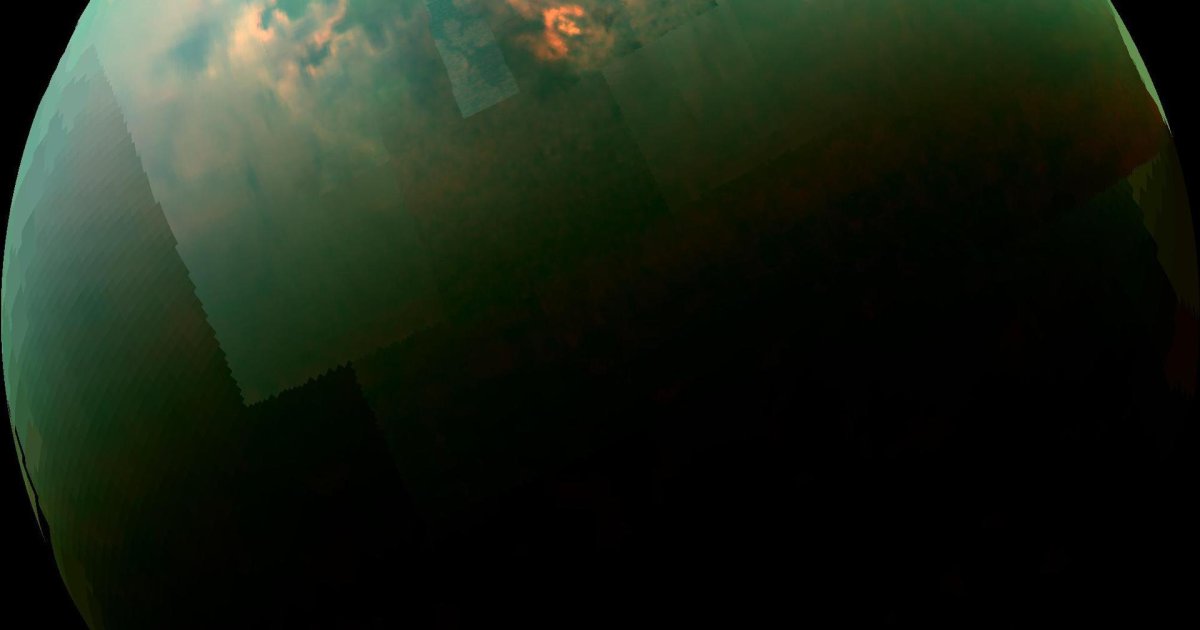
The precedent for detecting ocean glint was set by the Cassini spacecraft, which observed glint off the hydrocarbon lakes of Titan, Saturn's largest moon. This observation demonstrated the feasibility of detecting liquid surfaces from space, providing a foundation for applying similar techniques to exoplanets.
In conclusion, the work by Cornish & Robinson offers a promising avenue for identifying oceans on distant worlds, a key step in the search for extraterrestrial life. Their research not only enhances our understanding of ocean glint but also informs the design of future observatories aimed at discovering habitable exoplanets.