Introduction to the GLOW Survey
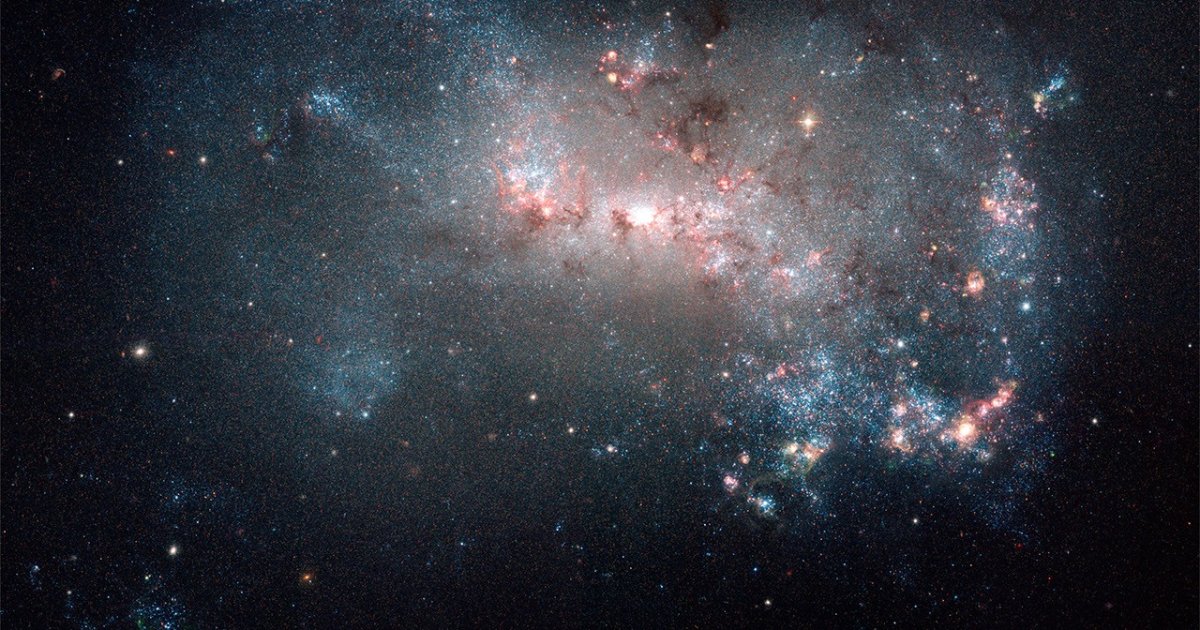
The GLOW (Galaxies Losing Oxygen via Winds) survey, published in November 2026 in The Astrophysical Journal, has provided new insights into the chemical evolution of dwarf galaxies. Utilizing archival data from the Hubble Space Telescope, the study focuses on 37 nearby dwarf galaxies within 6 megaparsecs (Mpc) of Earth, with stellar masses ranging from 106.5 to 109.5 solar masses. This research highlights a significant phenomenon: these galaxies retain only about 4-25% of the oxygen their stars produce, with a mean retention of approximately 11%.
Understanding Oxygen Retention in Dwarf Galaxies
Dwarf galaxies are small, low-mass galaxies that provide a unique laboratory for studying galaxy formation and evolution. According to NASA, the GLOW survey's findings suggest that supernova-driven winds play a crucial role in expelling oxygen from these galaxies into the circumgalactic medium. This process significantly affects the galaxies' chemical enrichment and evolution.
The Role of Supernova-Driven Winds
Supernovae, the explosive deaths of massive stars, are powerful enough to drive winds that can eject gas and metals from galaxies. In dwarf galaxies, these winds are particularly effective due to the galaxies' shallow gravitational wells. The GLOW survey indicates that these winds are responsible for the substantial loss of oxygen, a key element produced in stellar interiors and released during supernova explosions.
Implications for Chemical Enrichment
The loss of oxygen and other metals has profound implications for the chemical enrichment of dwarf galaxies. As Sci.News reports, the expelled oxygen contributes to the enrichment of the circumgalactic medium, influencing the future star formation and evolution of the galaxy. This process also affects the intergalactic medium, as expelled materials can eventually be incorporated into other galaxies.
Comparative Analysis with Larger Galaxies
Larger galaxies, such as the Milky Way, have deeper gravitational wells, which help them retain a higher percentage of the metals produced by their stars. In contrast, the findings from the GLOW survey underscore the vulnerability of dwarf galaxies to losing their chemical elements. This difference highlights the diverse evolutionary paths of galaxies based on their size and mass.
Future Research Directions
While the GLOW survey has provided valuable insights, it also raises new questions about the long-term evolution of dwarf galaxies. Scientists estimate that further studies, potentially involving next-generation telescopes like the James Webb Space Telescope, could offer deeper insights into the mechanisms driving oxygen loss and the interplay between galaxies and their surrounding environments.
Moreover, understanding the fate of the expelled oxygen and its impact on the circumgalactic and intergalactic media remains a critical area of research. Future observations and simulations will be crucial in unraveling these complex interactions.
Conclusion
The GLOW survey represents a significant step forward in our understanding of dwarf galaxies and their chemical evolution. By revealing the extent of oxygen loss in these galaxies, the study highlights the dynamic processes that shape galaxy evolution. As researchers continue to explore these phenomena, the findings from the GLOW survey will serve as a foundation for future investigations into the intricate dance of matter and energy in the universe.