Introduction to NGC 4698
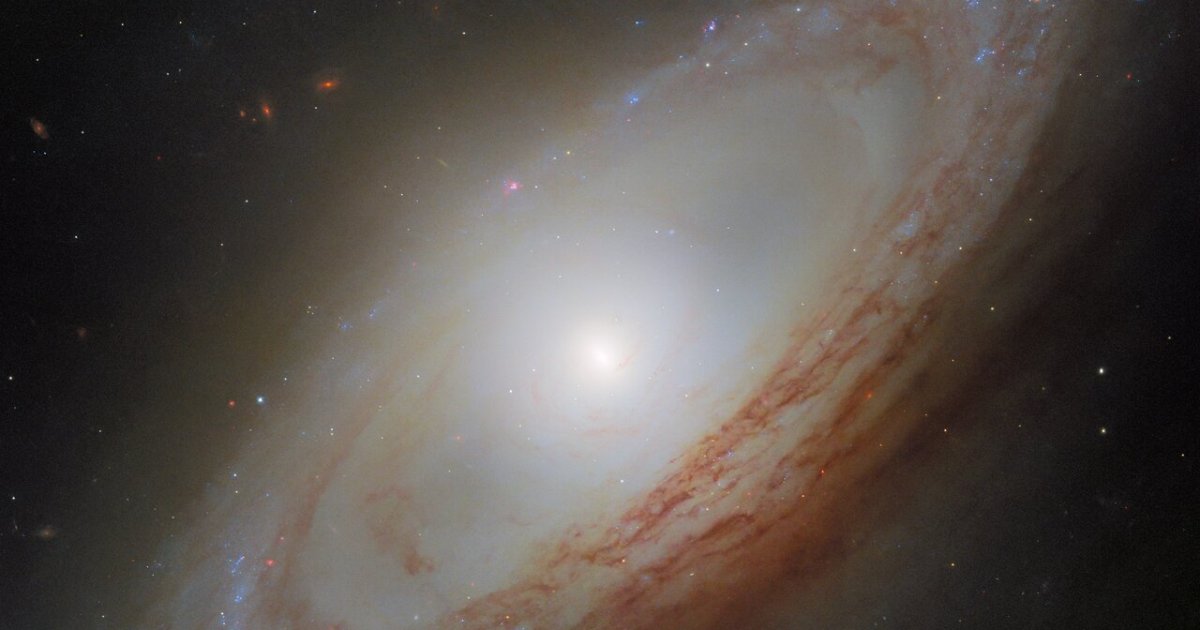
NASA's Hubble Space Telescope has once again captured the imagination of astronomers and space enthusiasts alike with its latest Picture of the Month, featuring the spiral galaxy NGC 4698. Situated approximately 55 million light-years away in the Virgo Cluster, this galaxy presents a fascinating anomaly: its central bulge, stars, and gas rotate perpendicular to its disc. This peculiar orientation has made NGC 4698 a subject of intense study, shedding light on the complex processes that govern galaxy evolution.
WFC3 Imaging and the MAUVE-HST Programme
The stunning image of NGC 4698 was captured using Hubble's Wide Field Camera 3 (WFC3) as part of the MAUVE-HST programme (programme 18103). This initiative focuses on ultraviolet-to-optical imaging to better understand the structural and compositional dynamics of galaxies. The WFC3's capabilities allow scientists to observe the galaxy in unprecedented detail, revealing the intricate dance of its components.
The Perpendicular Rotation Mystery
One of the most intriguing features of NGC 4698 is its perpendicular rotation. Unlike typical spiral galaxies, where the central bulge and disc rotate in the same plane, NGC 4698's bulge rotates at a right angle to its disc. Scientists estimate that this unique configuration may be the result of a minor merger or the accretion of external gas. Such events can disrupt the angular momentum of a galaxy, leading to unusual rotational dynamics.
The Ring-Like Outer Arms
Adding to the galaxy's mystique are its ring-like outer arms, which conspicuously avoid the central region. These arms suggest a history of dynamic interactions that may have influenced the galaxy's current structure. The avoidance of the center by these arms could be indicative of past gravitational interactions or the influence of a growing supermassive black hole at the galaxy's core.
The Role of the Supermassive Black Hole
At the heart of NGC 4698 lies a supermassive black hole, a common feature in many galaxies. The presence of this black hole could play a significant role in the galaxy's unique rotational behavior. As the black hole grows, it can exert a powerful gravitational influence, potentially affecting the motion of stars and gas within the galaxy. This influence might contribute to the perpendicular rotation observed in NGC 4698.
Minor-Merger and Gas-Accretion Explanation
One plausible explanation for NGC 4698's peculiar characteristics is a minor-merger or gas-accretion event. Scientists propose that the galaxy may have undergone a merger with a smaller galaxy, or it might have accreted gas from its surroundings. Such events can introduce new angular momentum, disrupting the existing rotational patterns and leading to the perpendicular orientation observed today.
Supporting this theory is the presence of an HI tail, a stream of neutral hydrogen gas that extends from the galaxy. This feature is often associated with past interactions and mergers, providing further evidence of NGC 4698's dynamic history.
Conclusion
NGC 4698 serves as a fascinating case study in the complexities of galaxy evolution. Its unique rotational dynamics, intriguing outer arms, and the potential influence of a supermassive black hole offer valuable insights into the processes that shape galaxies. As scientists continue to analyze data from Hubble's observations, NGC 4698 will undoubtedly remain a key focus in the quest to unravel the mysteries of the cosmos.
For more detailed information on this captivating galaxy, you can explore the ESA Hubble image and read about NASA's insights on this out-of-sync galaxy.