Introduction to Elias 2-24 b
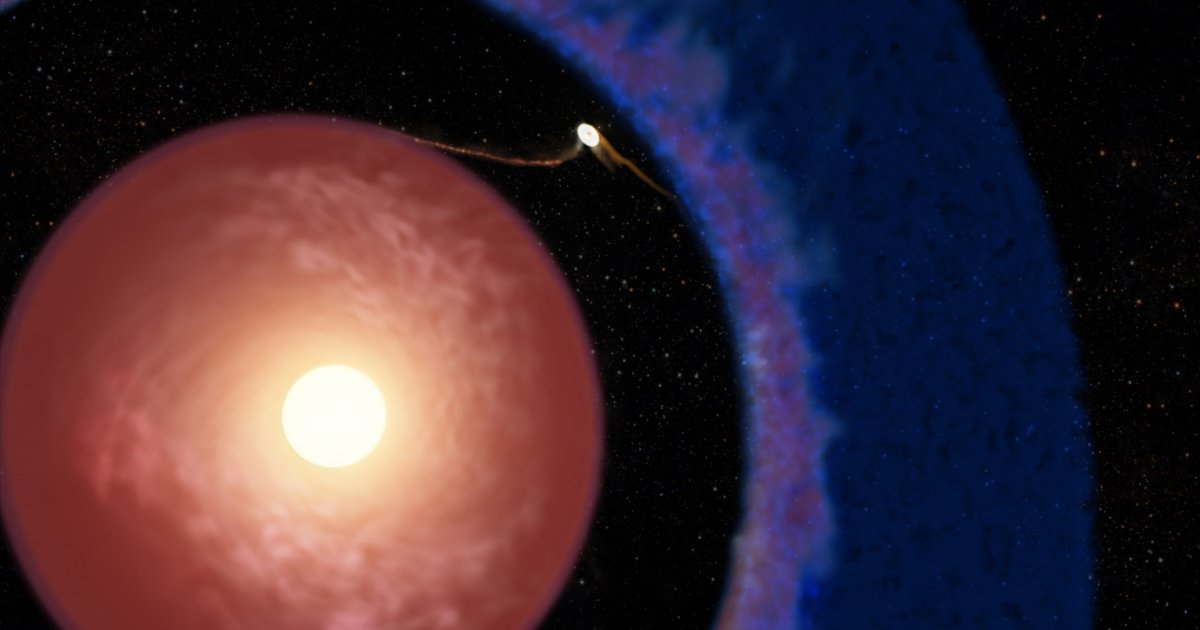
In a groundbreaking discovery, Elias 2-24 b has been identified as the youngest exoplanet ever confirmed. This remarkable planet, located approximately 450 light-years away in the constellation Ophiuchus, is estimated to be less than 1 million years old. It orbits its host star at a distance of 55 astronomical units (AU), which is roughly 55 times the distance from Earth to the Sun. Such a finding not only sets a new record for youthful exoplanets but also provides crucial insights into the early stages of planetary formation.
Discovery and Confirmation
The discovery of Elias 2-24 b was made possible through the analysis of archival data from the Keck Observatory's Near-Infrared Camera 2 (NIRC2) coronagraph. Led by Andrea Bernardi, the research team utilized this data alongside observations from the Atacama Large Millimeter/submillimeter Array (ALMA) and the Very Large Telescope (VLT) to confirm the planet's existence. The findings were published in the Astrophysical Journal Letters in September 2026, marking a significant milestone in exoplanetary science (Keck Observatory).
Challenges to Core-Accretion Models
Elias 2-24 b presents a fascinating challenge to traditional core-accretion models of planet formation. According to these models, giant planets like Jupiter form over millions of years through the gradual accumulation of solid material into a core, followed by the accretion of gas. However, the rapid formation of Elias 2-24 b suggests that alternative processes may be at play. Scientists estimate that the planet's current characteristics could be better explained by disk instability models, where gravitational instabilities within a protoplanetary disk lead to the rapid formation of gas giants.
Protoplanetary Disk and Accretion
One of the most intriguing aspects of Elias 2-24 b is its ongoing accretion from the surrounding protoplanetary disk. Observations indicate that the planet is still gathering material, a process that provides a direct link between disk gaps and planet formation. The presence of such gaps in the disk is often considered a telltale sign of planet formation, as the growing planet clears a path through the disk material. This phenomenon has been observed in other systems, but Elias 2-24 b offers a rare opportunity to study it in a very young system (NASA).
Implications for Exoplanetary Science
The discovery of Elias 2-24 b has far-reaching implications for our understanding of planet formation. It challenges existing theories and suggests that the processes involved may be more diverse and rapid than previously thought. The ability to directly image such a young planet also underscores the importance of advanced observational technologies and techniques in exoplanetary research. As scientists continue to study Elias 2-24 b, it is likely to provide further insights into the early stages of planetary development and the dynamics of protoplanetary disks (Science Daily).
Conclusion
Elias 2-24 b stands as a testament to the dynamic and rapidly evolving nature of our universe. Its discovery not only breaks records but also opens new avenues for research into the formation and evolution of planetary systems. As we continue to explore the cosmos, findings like these will undoubtedly reshape our understanding of how planets form and evolve in the vast expanse of space.