Introduction to TOI-2535 b
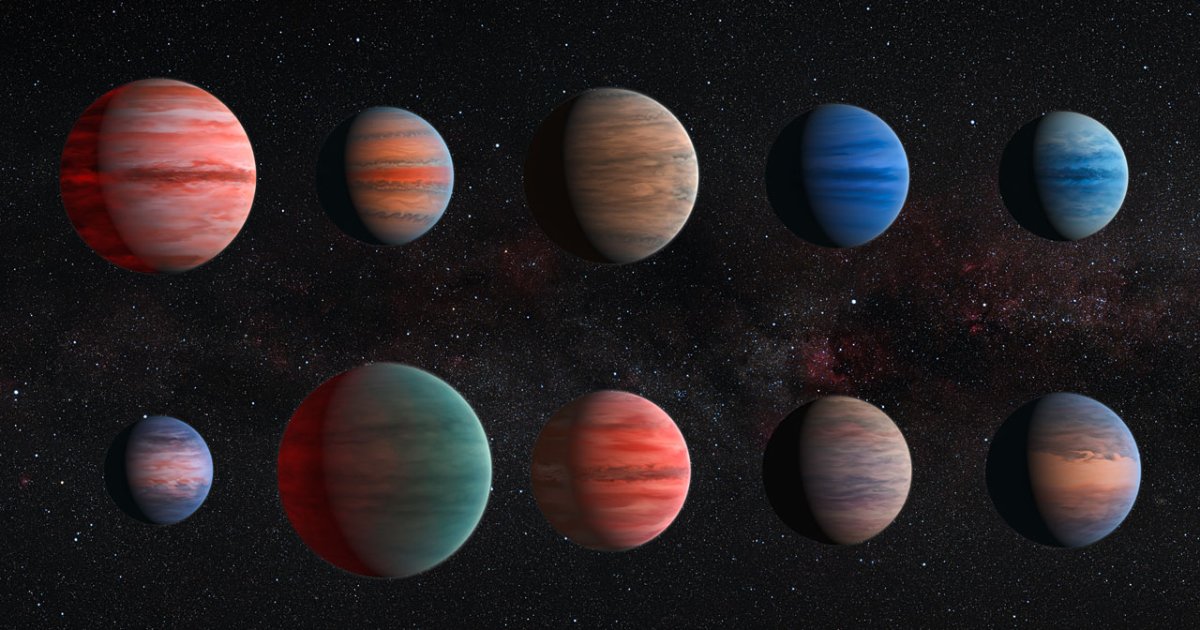
TOI-2535 b, a hot Jupiter located approximately 1,000 light-years away in the constellation Corvus, has become a focal point of interest for astronomers. This exoplanet was initially observed by NASA's Transiting Exoplanet Survey Satellite (TESS), which detected its transits across its host star, an old K dwarf. However, in a surprising turn of events, TOI-2535 b's transits vanished from view in early 2026, leaving scientists intrigued by its unusual orbital dynamics.
The Disappearance of Transits
Initially, TOI-2535 b exhibited a regular transit pattern with an orbital period of 8.25 days. However, astronomers noticed that these transits began to drift, eventually becoming up to six hours off schedule. This drift suggested that the planet's orbit was undergoing significant changes. By early 2026, TOI-2535 b's transits had completely disappeared, a phenomenon attributed to the planet's orbit tilting out of view.
Understanding Orbital Dynamics
The disappearance of TOI-2535 b's transits can be explained through the concept of orbital precession. According to a study by Yee et al. (ApJL 2026), the precession of TOI-2535 b's orbit is likely driven by gravitational interactions with an unseen companion. This companion is estimated to be at least Saturn-mass or greater and is believed to be in a mean-motion resonance with TOI-2535 b.
Mean-Motion Resonance
Mean-motion resonance occurs when two orbiting bodies exert regular, periodic gravitational influences on each other, typically due to their orbital periods being in a simple integer ratio. In the case of TOI-2535 b, the unseen companion's gravitational pull could be causing the planet's orbit to precess, gradually altering the orientation of its orbit relative to Earth. This would explain the observed drift in transit timing and the eventual disappearance of the transits.
Implications and Future Observations
The case of TOI-2535 b provides valuable insights into the complex dynamics of exoplanetary systems. The discovery highlights the importance of transit timing variations (TTVs) as a tool for detecting additional planets in a system. TESS's observations of TOI-2535 b underscore the potential for uncovering hidden companions that may not be directly observable.
Future observations with other telescopes, such as the James Webb Space Telescope (JWST) or ground-based observatories, could help confirm the presence of the unseen companion and further refine our understanding of the system's dynamics. Additionally, studying similar systems could enhance our knowledge of how gravitational interactions influence planetary orbits over time.
Conclusion
TOI-2535 b's vanishing transits represent a fascinating example of the dynamic and ever-changing nature of exoplanetary systems. The potential presence of an unseen companion driving the precession of its orbit offers a compelling narrative about the gravitational interplay within such systems. As astronomers continue to explore the cosmos, cases like TOI-2535 b will undoubtedly enrich our understanding of the universe's intricate workings.