Introduction to TOI-431 b
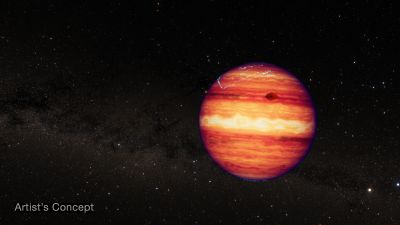
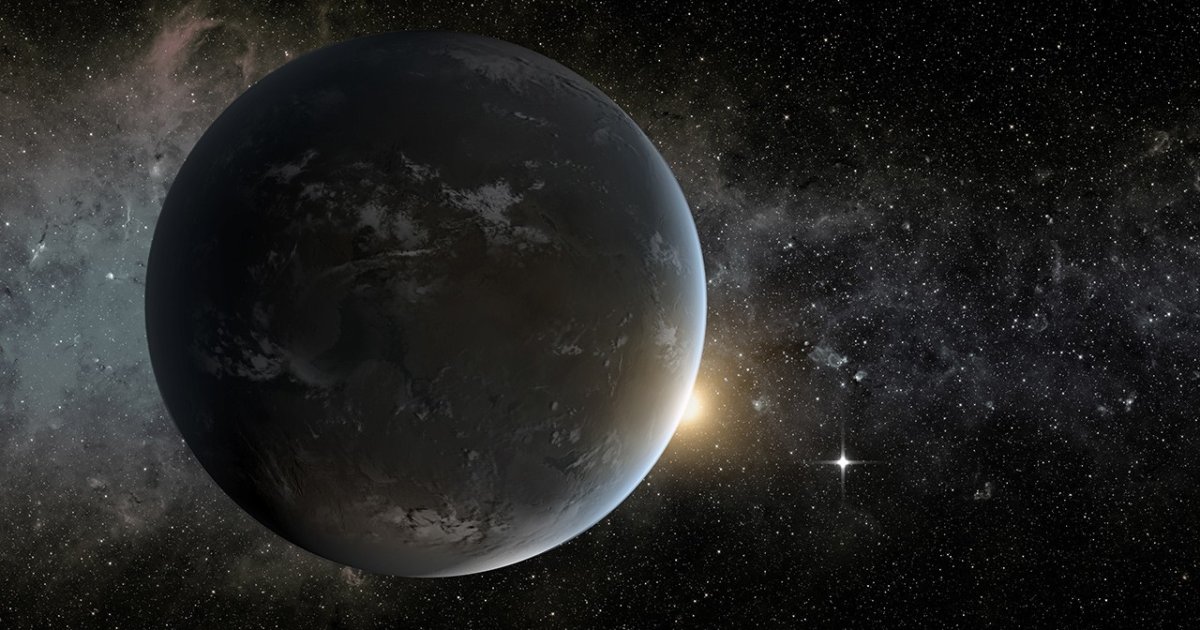
TOI-431 b is an intriguing exoplanet that has captured the attention of astronomers due to its unique characteristics. It is classified as a super-Earth, with a radius of 1.29 times that of Earth and a mass approximately 3.16 times greater. This exoplanet orbits a nearby K dwarf star every 0.49 days, making it an ultra-hot world. Recent observations using the James Webb Space Telescope (JWST) have provided new insights into this fascinating planet.
JWST's MIRI Observations
The JWST's Mid-Infrared Instrument (MIRI) has been pivotal in studying TOI-431 b. The data from the MIRI Low Resolution Spectroscopy (LRS) program, specifically program GO 4818 known as LAVA LAMPS, has revealed significant findings. During a secondary eclipse, where the planet passes behind its star, MIRI detected an eclipse depth of 81 ± 16 parts per million (ppm) in the 5-12 micron range. This measurement is crucial for understanding the planet's thermal properties and potential atmospheric composition.
Temperature and Eclipse Depth
The data indicates a dayside temperature of approximately 1967 Kelvin. This extreme temperature is consistent with TOI-431 b's classification as an ultra-hot super-Earth. The brightness-temperature ratio of 0.81 ± 0.10 suggests that the planet's dayside is about 1.8 sigma below what would be expected for a bare rock surface. This discrepancy hints at the possibility of a thin atmosphere, although further observations are needed to confirm this hypothesis.
Implications of a Thin Atmosphere
The potential presence of a thin atmosphere on TOI-431 b is a significant finding. Such an atmosphere could have profound implications for our understanding of whether super-Earths this close to their stars can hold on to volatiles at all. The measured brightness-temperature ratio is most consistent with an Earth-like atmosphere; a purely silicate, rock-vapour atmosphere would fit the data only if a highly reflective cloud deck were present, a scenario the authors regard as less likely.
However, it is essential to approach these findings with caution. The evidence for an atmosphere is tentative, and further observations and analyses are required to validate this possibility. Scientists estimate that additional spectroscopic data could help refine these measurements and provide more definitive conclusions.
Future Research Directions
Continued observations with the JWST and other telescopes will be crucial in unraveling the mysteries of TOI-431 b. Future studies may focus on obtaining more precise spectral data to confirm the presence of an atmosphere and to understand its composition better. Additionally, comparative studies with other super-Earths could provide broader insights into the formation and evolution of these fascinating worlds.
For more detailed information on TOI-431 b, you can explore the arXiv preprint or the Astronomical Journal article discussing these findings.