Understanding Time-Delay Cosmography
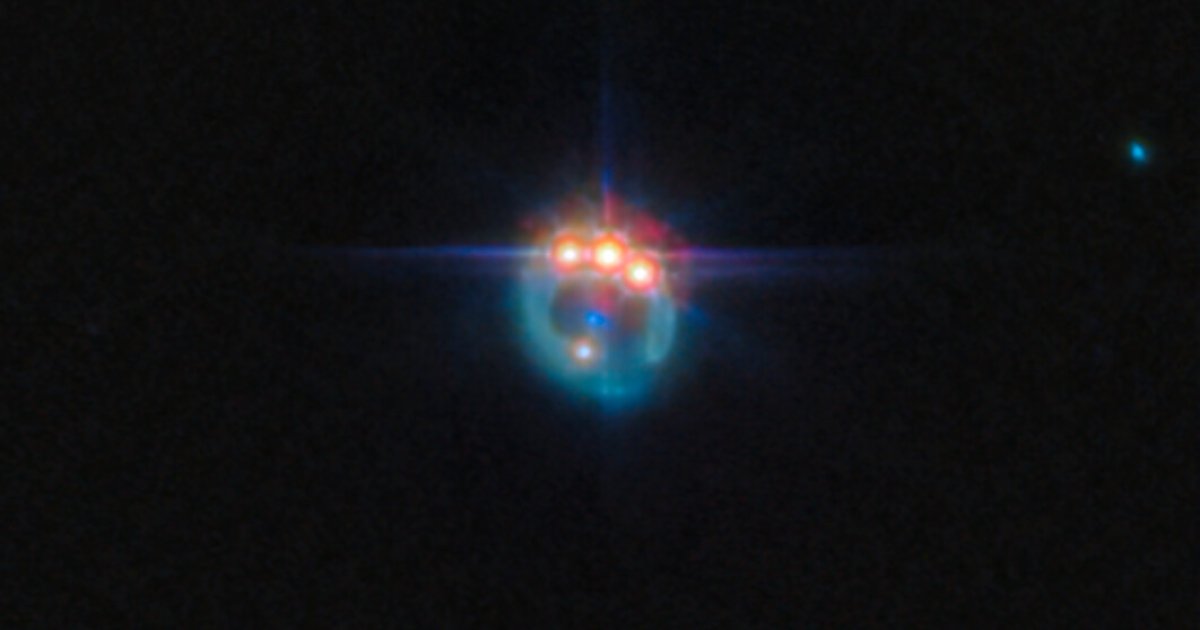
Time-delay cosmography is a technique that leverages the gravitational lensing of quasars to measure the Hubble Constant (H0). When a massive galaxy lies between Earth and a distant quasar, its gravitational field bends the light from the quasar, creating multiple images. These images take different paths and thus arrive at different times due to the varying distances and gravitational potential they traverse. By measuring these time delays, astronomers can infer the expansion rate of the universe.
The TDCOSMO 2026 Project
The TDCOSMO 2026 project has utilized this method with remarkable precision, examining 11 lensed quasars to derive a value for H0 of 71.1 km/s/Mpc, with an uncertainty of just 3% (±2.4/-2.3 km/s/Mpc). This measurement is independent of the traditional Cepheid distance ladder, which has been a cornerstone of cosmic distance measurement but also a source of potential systematic errors.
Data from the Hubble Space Telescope (HST) and the James Webb Space Telescope (JWST), combined with stellar kinematics observations from the Very Large Telescope (VLT) and Keck Observatory, have been pivotal in achieving these results. The use of such diverse datasets helps mitigate individual biases, enhancing the robustness of the findings.
Addressing the Mass-Sheet Degeneracy
One of the challenges in gravitational lensing is the mass-sheet degeneracy, a phenomenon where different mass distributions can produce similar lensing effects. This degeneracy complicates the precise determination of H0. TDCOSMO 2026 addresses this by employing sophisticated lens models and incorporating stellar kinematics, which provide additional constraints on the mass distribution of the lensing galaxies.
The Persistent Hubble Tension
The Hubble tension refers to the discrepancy between the H0 value derived from the early universe observations, such as those by the Planck satellite, and the value obtained from local measurements. The Planck data, which relies on the cosmic microwave background radiation, suggests a lower H0 of around 67.4 km/s/Mpc. In contrast, TDCOSMO 2026's findings are in line with other local measurements, such as those from the SH0ES team using Cepheid variables, which also suggest a higher value.
Despite the precision of TDCOSMO 2026's measurements, the tension with Planck data persists. The project reports a 3.7 sigma tension when combined with Dark Energy Spectroscopic Instrument (DESI) Baryon Acoustic Oscillations (BAO) data, and a 2.7 sigma tension when excluding the distance ladder entirely. These significant discrepancies suggest that there may be new physics beyond the current cosmological models or unrecognized systematic errors in the measurements.
Implications for Cosmology
The results of TDCOSMO 2026 are crucial for cosmology as they provide an independent verification of the local value of H0 without relying on the Cepheid distance ladder. This strengthens the case for a real discrepancy between local and early universe measurements. Resolving the Hubble tension is essential for our understanding of the universe's expansion history and could have profound implications for cosmological theories.
For further reading, explore the detailed study and the comprehensive analysis of the TDCOSMO 2026 findings.