Introduction
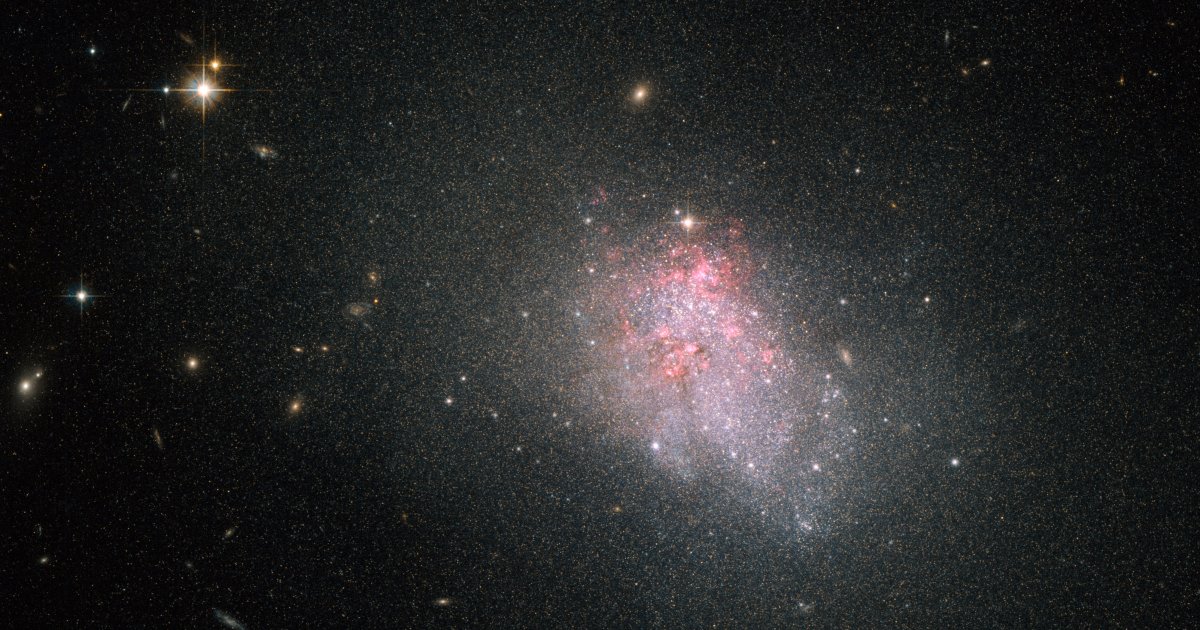
A groundbreaking study published in Nature Astronomy on October 15, 2026, by Cody Carr, Renyue Cen, and Stephan McCandliss, sheds new light on the role of galactic winds in starburst galaxies. Utilizing Hubble Space Telescope spectroscopy, the researchers discovered that supernova-driven galactic winds in six nearby compact starburst galaxies actually block Lyman continuum radiation from escaping into the intergalactic medium. This finding challenges previous assumptions that these winds clear channels for radiation, a key factor in cosmic reionization models.
Galactic Winds and Lyman Continuum Radiation
Lyman continuum radiation, comprising photons with energies sufficient to ionize hydrogen, is crucial for understanding the epoch of reionization. During this period, the first stars and galaxies ionized the neutral hydrogen that filled the universe after the Big Bang. For years, scientists have debated the sources of this radiation, with starburst galaxies being strong candidates due to their intense star formation and supernova activity.
However, the new findings suggest that the very winds generated by supernovae in these galaxies may hinder rather than help the escape of Lyman continuum radiation. The study found that the galaxies with the fastest winds leaked the least radiation. This contradicts the previous belief that such winds would carve out low-density channels, facilitating the escape of ionizing photons.
Implications for Reionization Models
The implications of this study are significant for reionization models and simulations. If supernova-driven winds are indeed blocking Lyman continuum radiation, then starburst galaxies may not contribute as much to cosmic reionization as previously thought. This necessitates a reevaluation of the sources responsible for reionizing the universe.
Scientists estimate that other mechanisms or sources, such as quasars or low-mass galaxies, might play a more significant role than previously modeled. This could lead to adjustments in the parameters used in cosmological simulations, affecting our understanding of the timeline and progression of the reionization epoch.
Revisiting Previous Assumptions
Prior models assumed that the energy from supernovae would clear paths through the interstellar medium, allowing ionizing photons to escape. However, the Hubble study's findings suggest that these winds may instead create dense shells or bubbles that trap radiation. This revelation calls for a reexamination of the physical processes at play in starburst galaxies and their contribution to the ionization of the early universe.
Future Research Directions
Future research will likely focus on more detailed simulations incorporating these new findings. Observations from other telescopes, such as the James Webb Space Telescope (JWST), could provide additional data to refine models. Scientists may also explore the role of magnetic fields and other forces in shaping the escape routes of ionizing radiation.
Additionally, further studies could investigate the conditions under which galactic winds might facilitate rather than hinder radiation escape. Understanding the balance between wind speed, density, and radiation leakage could offer new insights into the dynamics of starburst galaxies.
Conclusion
This study highlights the complex interplay between galactic winds and radiation escape in starburst galaxies. By challenging existing paradigms, it opens new avenues for research and holds the potential to reshape our understanding of the universe's reionization. As scientists continue to explore these phenomena, they will refine our models of the early universe, enhancing our comprehension of cosmic history.
For more information, you can read the full study on Nature Astronomy or explore related coverage on Science Daily and Phys.org.