Unveiling the Secrets of Extreme Debris Disks
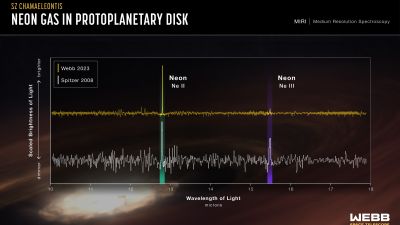
In a groundbreaking study published in The Astrophysical Journal on October 1, 2026, lead author Kate Su and her team have utilized the James Webb Space Telescope (JWST) to survey 21 extreme debris disks. This research offers new insights into the chaotic processes that shape planetary systems. The study includes data from 16 disks observed by Webb and 5 from Spitzer's archival data, providing a comprehensive view of these rare and tumultuous environments.
Silica-Rich vs. Silica-Poor Disks
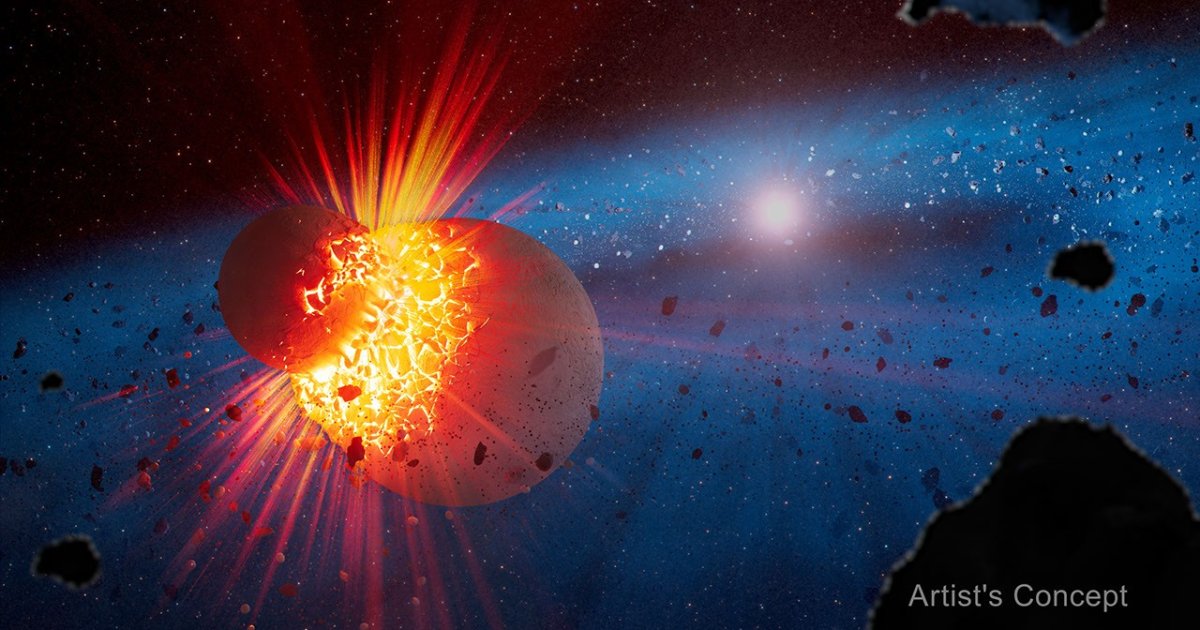
The research highlights a significant distinction between silica-rich and silica-poor debris disks. Silica-rich disks are often the result of high-energy impacts that vaporize planetary material, while silica-poor disks may stem from less violent collisions. This differentiation is crucial for understanding the types of collisions that occur in young planetary systems.
Planet-Shattering Collisions: Mars-Sized vs. Moon-Sized Impacts
The study delves into the nature of the collisions responsible for these disks. Scientists estimate that vaporizing impacts between Mars-sized bodies are more likely to create silica-rich disks. In contrast, grazing collisions involving Moon-sized bodies tend to produce silica-poor disks. These findings help clarify the dynamics of planetary formation and the role of giant impacts in shaping young systems.
The ~300-Myr Cutoff and Rarity Among Young Stars
One of the key insights from the study is the ~300-million-year cutoff for the presence of extreme debris disks. This suggests that such disks are a transient phase in the evolution of planetary systems. Furthermore, the study finds that extreme debris disks are rare, occurring in only about 1% of young stars. This rarity underscores the unique and violent nature of the processes that create these disks.
Implications for Lunar Formation
The findings have significant implications for our understanding of lunar formation. The study suggests that similar giant impacts could have played a role in the formation of Earth's Moon. By examining these extreme debris disks, scientists can gain insights into the conditions and processes that may have led to the creation of our own satellite.
For more information, you can read about the NASA's Webb mission and the latest findings on planet-shattering collisions.