Introduction to 70 Ophiuchi AB
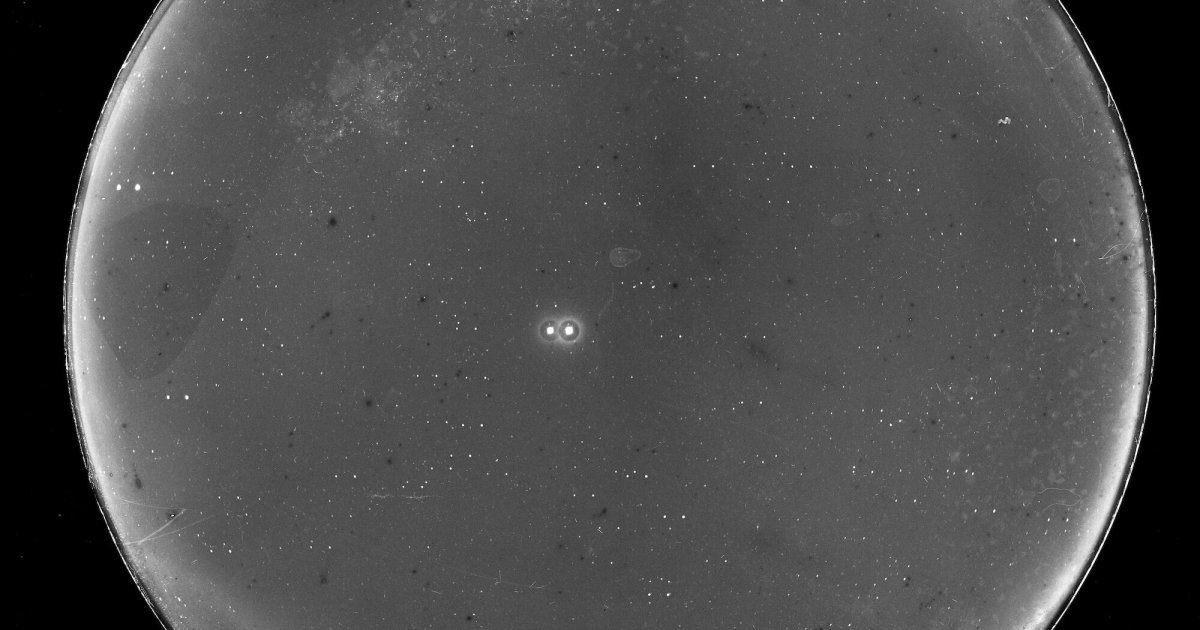
Located just 16 light-years away in the constellation Ophiuchus, the binary star system 70 Ophiuchi AB has intrigued astronomers for over a century. This system consists of two stars, 70 Ophiuchi A and B, which orbit each other every 88.38 years. The proximity and characteristics of this binary system make it a prime candidate for exoplanet research.
The 1855 William Jacob Claim
The quest to find planets around 70 Ophiuchi AB dates back to 1855 when British astronomer William Stephen Jacob suggested the presence of a planetary body based on irregularities in the stars' motion. This was one of the first proposals of an exoplanet, long before the technology to confirm such claims existed. Jacob's hypothesis, however, was later attributed to stellar activity-induced wobble rather than an actual planet.
Modern Observations and Techniques
Recent advancements in radial-velocity and astrometric monitoring have allowed scientists to revisit the claims of planetary bodies within this system. Using the Magellan Clay Telescope's Planet Finder Spectrograph (PFS) and data from the McDonald Observatory, researchers have conducted extensive studies to detect any large planets orbiting these stars.
Ruling Out Jupiter-Mass Planets
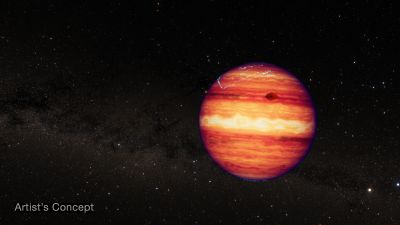
According to a study published in The Astrophysical Journal, the data collected over the years have effectively ruled out the presence of Jupiter-mass planets within 5 AU of 70 Ophiuchi A and 0.5 AU of 70 Ophiuchi B. This finding is significant as it narrows down the possibilities for the types of planets that might exist in this system.
The Stellar-Activity Wobble
One of the challenges in confirming exoplanets in binary systems like 70 Ophiuchi AB is the stellar-activity wobble. This phenomenon can mimic the gravitational effects of a planet, leading to false positives. The recent studies have accounted for these wobbles, providing a clearer picture of the system's dynamics.
Possibilities for Sub-Saturn Worlds
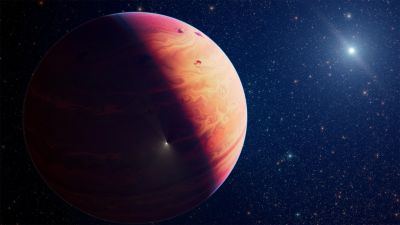
While the search for Jupiter-sized planets has been ruled out, the possibility of smaller, sub-Saturn mass planets remains open. Scientists estimate that such planets could exist within the habitable zone of 70 Ophiuchi AB, where conditions might be right for liquid water. This keeps the system in the spotlight for future exoplanet exploration.
Conclusion
The 70 Ophiuchi AB system continues to be a focal point for astronomers seeking to understand the complexities of binary star systems and their potential for hosting exoplanets. While the search for large planets has yielded no results, the door remains open for discovering smaller, potentially habitable worlds. As technology advances, so too will our understanding of this intriguing system.