Understanding the Significance of a Light-Day
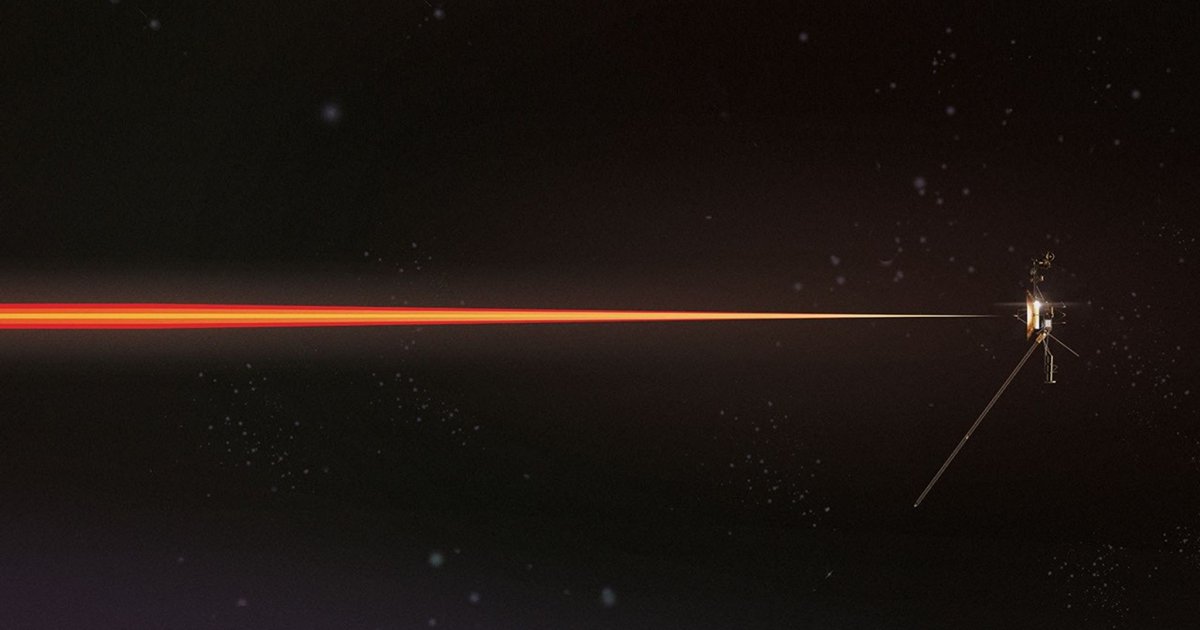
On November 18, 2026, Voyager 1 will reach a remarkable milestone by being one light-day away from Earth. A light-day is the distance that light travels in one day, approximately 16,094,799,096 miles (25.9 billion kilometers). This achievement marks just over 49 years since the spacecraft was launched in September 1977 by NASA's Jet Propulsion Laboratory (JPL).
The 48-Hour Round-Trip Signal
As Voyager 1 reaches this distance, the time taken for a signal to travel from Earth to the spacecraft and back will be 48 hours. This delay poses significant challenges for communication and control, requiring precise planning and execution by mission controllers. The Deep Space Network (DSN), a global system of antennas managed by NASA, plays a crucial role in maintaining contact with Voyager 1.
Cruising at 38,000 mph
Voyager 1 continues to cruise through interstellar space at an impressive speed of approximately 38,000 miles per hour. Despite its age, the spacecraft remains a testament to human ingenuity and the enduring quest for knowledge beyond our solar system.
Power-Saving Operations and Challenges
September 2026 Power-Saving Measures
In September 2026, mission controllers implemented power-saving operations to extend Voyager 1's operational life. This involved switching off three non-essential devices, allowing the spacecraft to conserve energy as its power sources continue to deplete. These measures are crucial for ensuring that Voyager 1 can continue to send valuable data back to Earth.
Thruster Fault and Signal Recovery
In October 2026, between the 18th and 20th, Voyager 1 experienced a thruster fault, temporarily disrupting its ability to maintain orientation. The DSN successfully recovered the signal, demonstrating the resilience and adaptability of the mission team. Such incidents highlight the challenges of operating a spacecraft at such extreme distances.
Looking Ahead: The Gliese 445 Encounter
Voyager 1 is on a trajectory that will bring it within 1.7 light-years of the star Gliese 445 in approximately 40,000 years. This distant encounter underscores the vastness of space and the long-term nature of humanity's exploration efforts. While we won't witness this event, it serves as a reminder of the enduring legacy of the Voyager mission.
For more details on Voyager 1's journey and its scientific contributions, visit the NASA Voyager Mission page and NASA's Night Sky Network.