Introduction to the Neptunian Desert
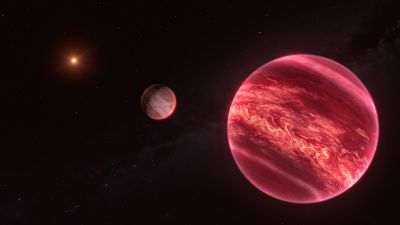
The Neptunian desert is a region in the exoplanetary parameter space characterized by a scarcity of planets with sizes and masses similar to Neptune, orbiting close to their stars. This phenomenon has puzzled astronomers, as it suggests that such planets either do not form in these regions or are unable to survive long-term due to intense stellar irradiation. The recent study by Castro-Gonzalez et al., published in Astronomy & Astrophysics in September 2026, shines new light on this enigmatic area by confirming the existence of two extremely irradiated sub-Neptunes, TOI-426 b and TOI-1839 b, at the lower edge of the Neptunian desert.
Discovery of TOI-426 b and TOI-1839 b
Using data from NASA's Transiting Exoplanet Survey Satellite (TESS) and 147 radial velocity measurements from the High Accuracy Radial velocity Planet Searcher (HARPS), the study identifies TOI-426 b and TOI-1839 b as intriguing candidates for further exploration. These planets have remarkably short orbital periods of approximately 1.3 to 1.4 days and are about 2.2 times the radius of Earth, with masses around 7 Earth masses. The intense stellar irradiation they receive, ranging from 1050 to 1700 times that of Earth, places them in a unique position within the Neptunian desert.
Characteristics and Composition
Despite their proximity to their host stars and the resulting high levels of irradiation, TOI-426 b and TOI-1839 b exhibit densities that suggest the presence of steam or water-rich envelopes rather than hydrogen/helium-dominated atmospheres. This finding is significant as it challenges previous assumptions about the composition of planets in such extreme environments. The study suggests that these planets have managed to retain substantial volatile envelopes, which could provide insights into their formation and evolutionary histories.
Atmospheric Escape and Survival
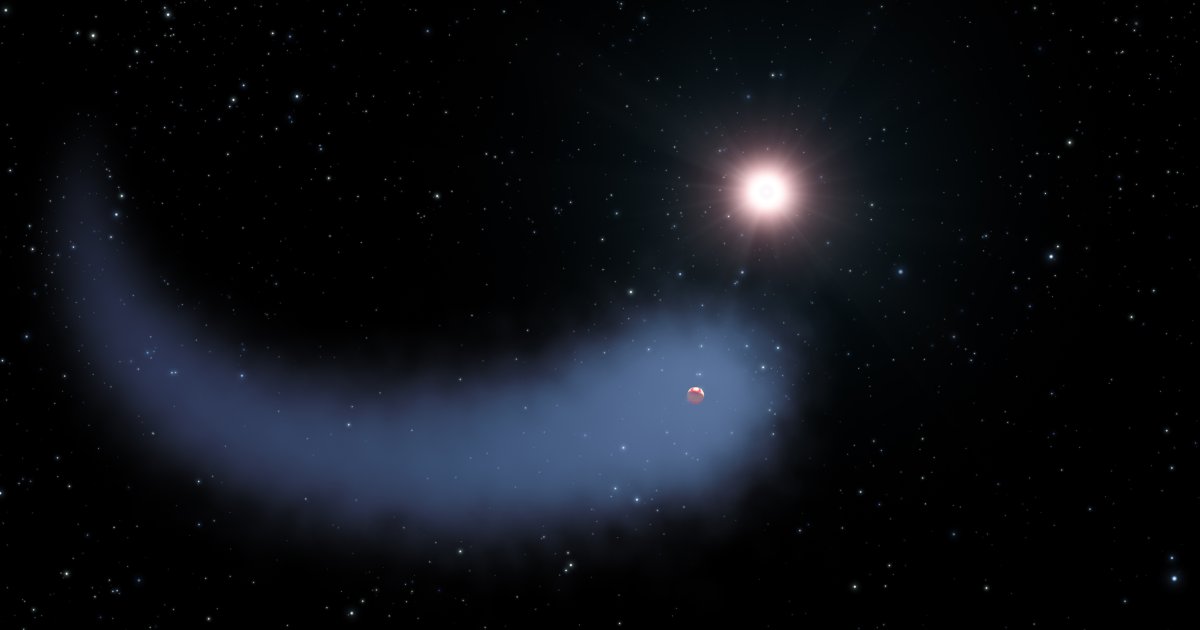
One of the key challenges for planets in the Neptunian desert is atmospheric escape. The intense radiation from their host stars can strip away lighter elements, leading to a loss of atmosphere over time. However, the study indicates that the escape timescales for TOI-426 b and TOI-1839 b are longer than previously thought, allowing them to maintain their atmospheres despite the harsh conditions. This discovery raises questions about the mechanisms that enable such planets to survive in the Neptunian desert and suggests a potential role for magnetic fields or other protective factors.
Tidal Migration and Outer-Giant Companions
Another intriguing aspect of the study is the potential role of tidal migration in the current positions of TOI-426 b and TOI-1839 b. The presence of outer giant companions is noted as a possible factor influencing their migration into the Neptunian desert. The gravitational interactions with these larger bodies could have caused the planets to move inward from their original formation locations, resulting in their current orbits. This hypothesis is supported by the observed excess of outer-giant companions in these systems, suggesting a common evolutionary pathway for sub-Neptunes in similar environments.
Conclusion
The confirmation of TOI-426 b and TOI-1839 b at the lower edge of the Neptunian desert provides valuable insights into the complex processes governing planetary formation and evolution. These findings challenge existing models and highlight the need for further research to understand the mechanisms that allow such planets to exist in extreme conditions. As scientists continue to explore these fascinating worlds, they may uncover new clues about the diverse nature of exoplanetary systems and the factors that shape their development.