Understanding Type Ia Supernovae and Their Role in Cosmology
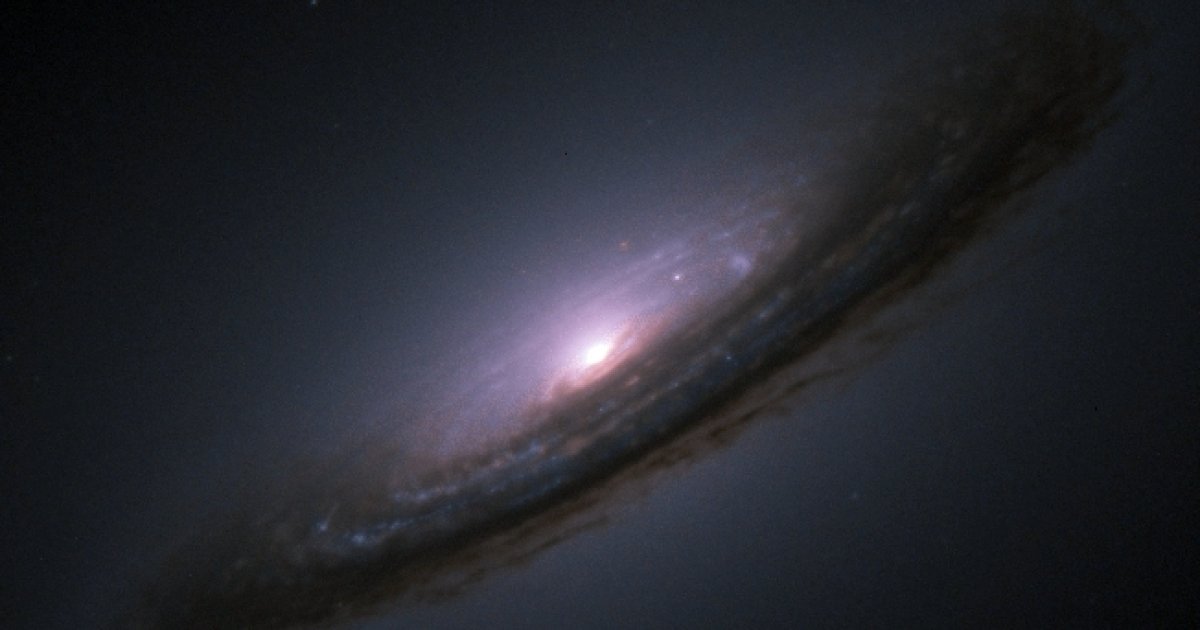
Type Ia supernovae have long been pivotal in cosmology due to their role as 'standard candles.' These stellar explosions occur in binary systems where a white dwarf accretes matter from a companion star until it reaches a critical mass, leading to a thermonuclear explosion. The uniformity in their peak brightness allows astronomers to measure cosmic distances accurately. This standardization process is crucial for determining the rate of cosmic expansion.
The Pantheon+ Dataset and Its Significance
The Pantheon+ dataset, comprising over 1,700 Type Ia supernovae, is one of the most comprehensive collections used to study cosmic acceleration. It has been instrumental in supporting the theory of an accelerating universe driven by dark energy. However, a recent reanalysis by Sah, Rameez, and Sarkar has sparked significant debate.
The Reanalysis: Deceleration and Anisotropy
Sah, Rameez, and Sarkar's reanalysis introduces a progenitor-age correction to the Pantheon+ dataset. This correction accounts for variations in the ages of the progenitor systems, which may affect the brightness of the supernovae. Their findings suggest not only a deceleration of cosmic expansion but also a direction-dependent signal aligned with our Cosmic Microwave Background (CMB) dipole. This anisotropy challenges the isotropic nature of cosmic expansion, a fundamental assumption in cosmology.
Counterarguments: The Case for Continued Acceleration
In response, Wiseman and Vincenzi et al. have defended the prevailing view of cosmic acceleration. They argue that the statistical methods and corrections applied by Sah, Rameez, and Sarkar may not adequately account for all variables, maintaining that the evidence still supports an accelerating universe. Their analysis suggests that the observed anisotropy could be a result of systematic errors or local cosmic structures rather than a fundamental cosmological shift.
The Role of the Rubin Observatory and LSST
The upcoming Rubin Observatory, with its Legacy Survey of Space and Time (LSST), is expected to play a crucial role in resolving this debate. The LSST will provide unprecedented data on billions of galaxies, allowing for a more detailed map of cosmic expansion and potential anisotropies. With its ability to observe a larger volume of the universe with greater precision, the Rubin Observatory could confirm or refute the findings of Sah, Rameez, and Sarkar by providing a more comprehensive dataset.
Conclusion
The debate over cosmic acceleration and anisotropy in the Pantheon+ dataset underscores the dynamic nature of cosmological research. As scientists continue to refine their methods and gather more data, the true nature of cosmic expansion will become clearer. The Rubin Observatory's LSST promises to be a key player in this ongoing investigation, potentially reshaping our understanding of the universe.
For further reading, explore the detailed analysis and the counterarguments presented in recent studies.