Understanding 21cm Intensity Mapping
21cm intensity mapping is a powerful technique used to study the large-scale structure of the universe. It focuses on detecting the faint radio waves emitted by neutral hydrogen atoms at a wavelength of 21 centimeters. This signal allows astronomers to map the distribution of hydrogen over vast cosmic distances, providing a three-dimensional view of the universe's structure.
MeerKAT's Remarkable Achievement
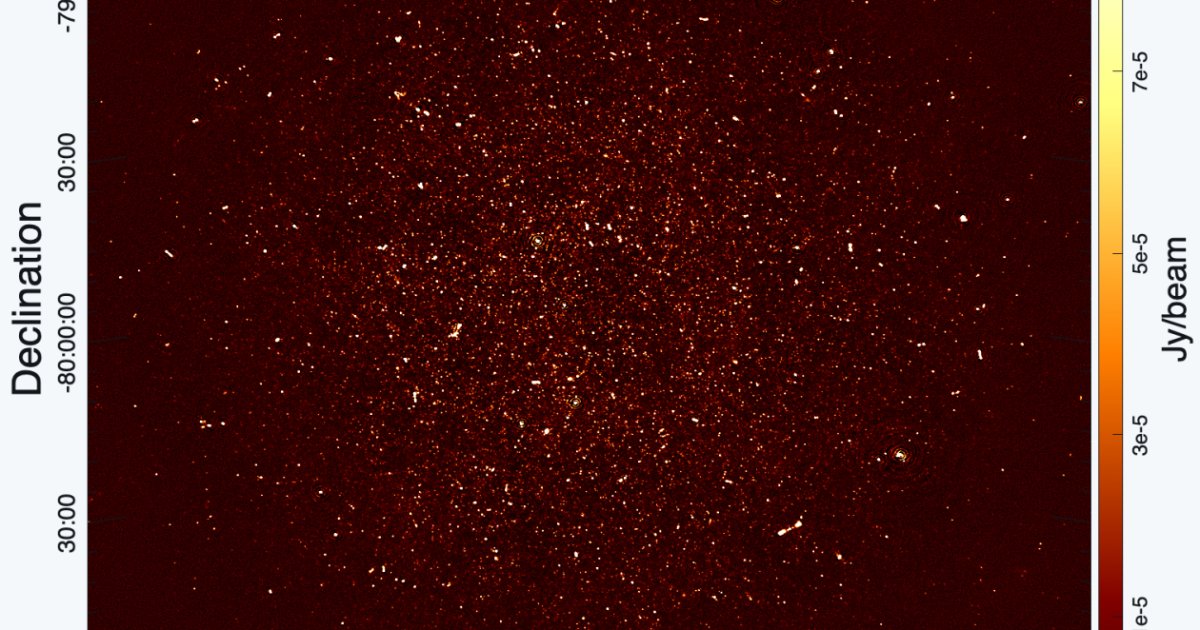
The MeerKAT radio telescope in South Africa has made headlines by achieving the first direct detection of the neutral hydrogen 21cm intensity mapping signal on megaparsec (Mpc) scales at redshifts around z~0.32 and z~0.44. This groundbreaking discovery was made using approximately 96 hours of data collected in 2018, demonstrating the telescope's exceptional sensitivity and capabilities.
Why 96 Hours of Data Was Sufficient
MeerKAT's ability to detect the 21cm signal with just 96 hours of data is a testament to its advanced design and the strategic planning of the observation campaign. The telescope's large array of 64 dishes provides a vast collecting area, enhancing its sensitivity to faint signals. Additionally, the data processing techniques employed were optimized to extract the weak hydrogen signal from the noise, making efficient use of the available observation time.
Overcoming Foreground and RFI Challenges
Detecting the 21cm signal is notoriously challenging due to the presence of foreground emissions from our galaxy and radio frequency interference (RFI) from human-made sources. The MeerKAT team employed sophisticated algorithms to separate the cosmological signal from these contaminants. By accurately modeling and subtracting the foreground emissions, they were able to isolate the faint hydrogen signal. Moreover, careful selection of observing times and frequencies helped minimize the impact of RFI.
Detection Without Optical Galaxy Cross-Correlation
One of the most significant aspects of this detection is that it was achieved without relying on cross-correlation with optical galaxy surveys. This independence underscores the robustness of the 21cm intensity mapping technique and highlights MeerKAT's capability to directly probe the universe's structure. This method opens new avenues for studying cosmology, as it does not depend on the distribution of visible galaxies.
Implications for SKAO Cosmology
The success of MeerKAT's 21cm detection has profound implications for the upcoming Square Kilometre Array Observatory (SKAO). As the world's largest radio telescope, SKAO will build upon MeerKAT's achievements to conduct even more detailed studies of the universe's large-scale structure. The ability to map hydrogen distribution at various redshifts will provide critical insights into cosmic evolution, dark matter, and dark energy.
MeerKAT's breakthrough demonstrates the feasibility of using 21cm intensity mapping as a standalone tool for cosmological research. This paves the way for future surveys with SKAO, which are expected to revolutionize our understanding of the universe's history and composition.
For more information on this discovery, you can read the full articles from The University of Manchester and Phys.org.