Introduction to Trans-Neptunian Objects
Trans-Neptunian Objects (TNOs) are celestial bodies located beyond Neptune's orbit, residing primarily in the Kuiper Belt. These objects are remnants from the early solar system, providing valuable insights into planetary formation and evolution. The recent joint deep survey conducted by the Hubble Space Telescope and the James Webb Space Telescope (JWST) has unveiled new findings that challenge existing models of planet formation.
Survey Findings: New Discoveries and Surprises
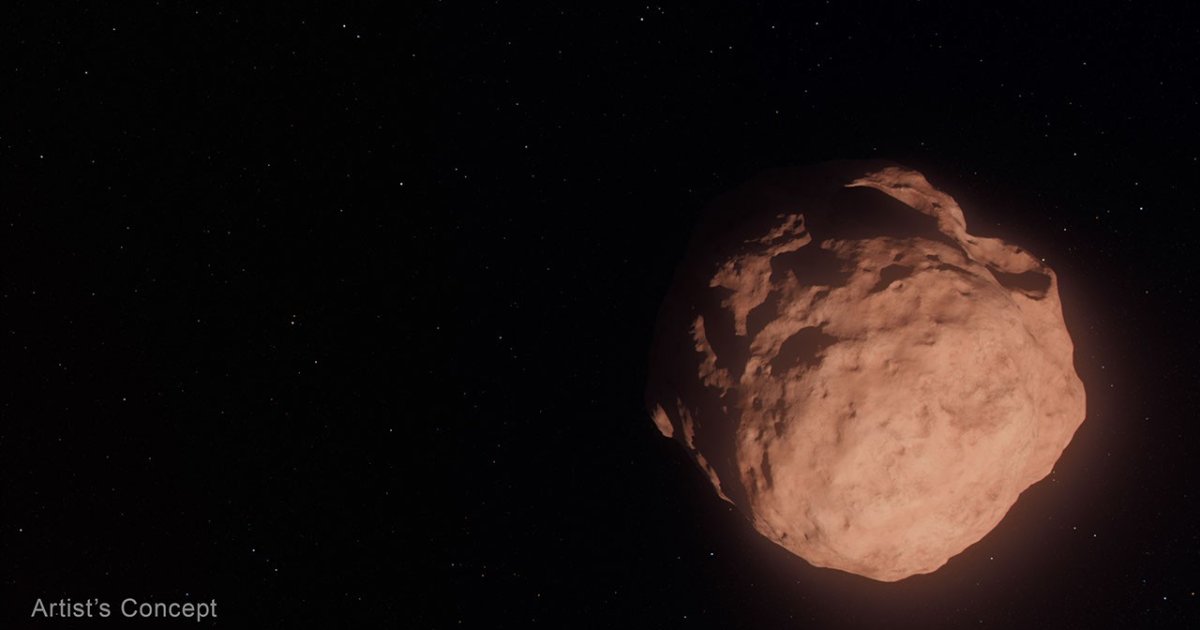
In a groundbreaking study published in the Astronomical Journal on September 8, 2026, astronomers utilized the combined capabilities of the Hubble and Webb telescopes to conduct a deep survey of TNOs. The survey identified 27 new ultra-faint TNOs, with the smallest being approximately 5 kilometers in diameter. This discovery is significant as it expands our understanding of the size distribution of these distant objects.
One of the most surprising findings from this survey is the apparent scarcity of small TNOs. Current planet-formation models predicted a larger population of these small objects. This discrepancy suggests that our understanding of the processes that govern the formation and evolution of the solar system's outer regions may need to be revised.
Color Consistency Among TNOs
Another intriguing discovery is that the newly found tiny TNOs share similar colors with their larger counterparts. This uniformity in coloration indicates that surface collisions, which could have resurfaced these objects and altered their appearance, have not occurred as frequently as previously thought. This finding challenges the assumption that smaller TNOs would have distinct surface characteristics due to frequent collisions.
Dynamically Hot vs. Cold Populations
The survey also sheds light on the dynamically hot and cold populations of TNOs. Dynamically cold TNOs have low-inclination orbits and are thought to have formed in situ, while dynamically hot TNOs have higher-inclination orbits, suggesting they were scattered into their current positions by gravitational interactions with the giant planets.
The new data from the Hubble and Webb survey suggest that dynamically hot TNOs may have a different formation history than previously believed. The presence of fewer small TNOs in both populations implies that the processes of accretion and collision in the early solar system may have been less efficient or different than current models suggest.
Implications for Planetesimal Formation
The findings from this survey have significant implications for our understanding of planetesimal formation in the outer solar system. The observed scarcity of small TNOs and the consistent coloration across sizes suggest that the early solar system's conditions and processes were more complex than previously thought. These insights could lead to revised models that better account for the observed characteristics of TNOs.
As scientists continue to analyze the data from this survey, further research will be necessary to refine our understanding of the formation and evolution of TNOs. The collaboration between the Hubble and Webb telescopes has proven invaluable in advancing our knowledge of these distant objects, and future surveys are likely to yield even more groundbreaking discoveries.
For further reading, you can explore the NASA's Hubble and Webb findings and the detailed study in the Astronomical Journal.