Hubble's Milestone and the Quest for Supernova Athena
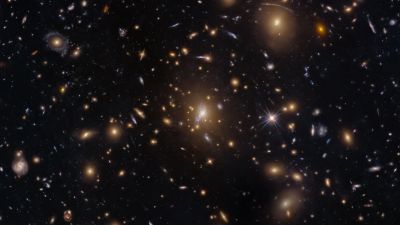
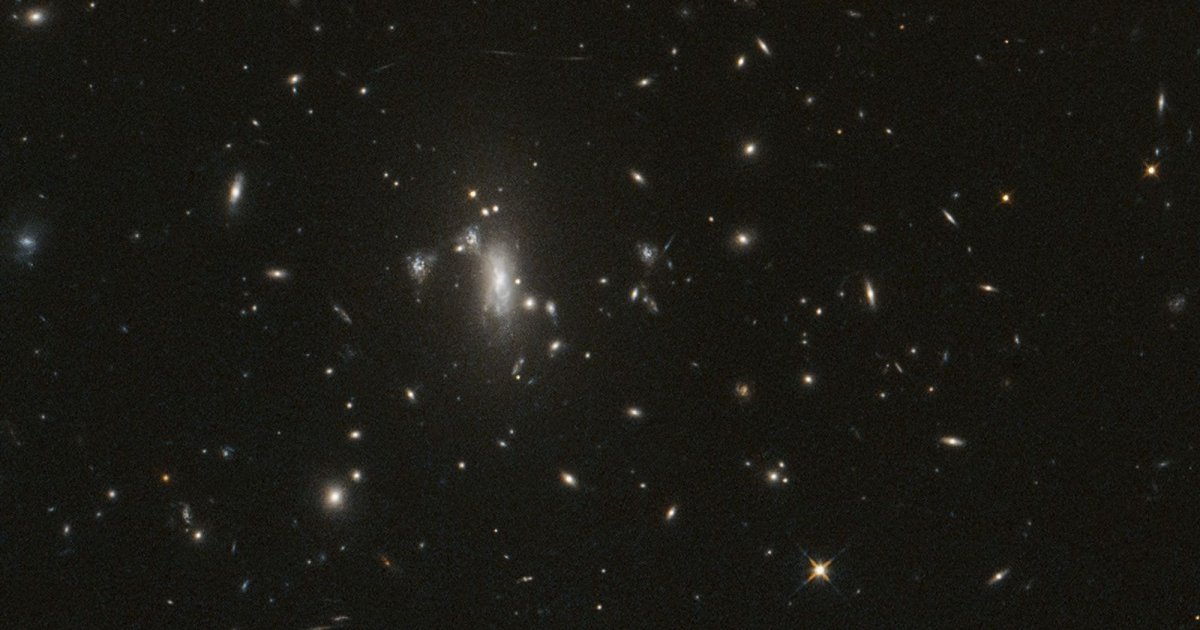
In September 2026, the Hubble Space Telescope will achieve a monumental milestone: its 200,000th orbit around Earth. As part of this historic event, Hubble is set to capture images of the galaxy cluster MACS J0417, a gravitational lens that has piqued the interest of astronomers worldwide. This observation is particularly significant as scientists await the reappearance of Supernova Athena, initially discovered by the James Webb Space Telescope (JWST) in 2025. The supernova is expected to reappear before March 2027, providing a unique opportunity to study the effects of gravitational lensing.
Understanding Gravitational Lensing and Time Delays
Gravitational lensing occurs when a massive object, like a galaxy cluster, bends the light from a more distant object, such as a supernova, creating multiple images of the same event. This phenomenon is crucial for astronomers because it allows them to map the mass distribution within the lensing cluster. In the case of MACS J0417, the gravitational lensing effect is expected to produce time delays in the appearance of Supernova Athena's images. These time delays occur because the light paths for each image differ due to the cluster's gravitational influence.
By measuring the time delays between these multiple images, scientists can refine their models of the cluster's mass distribution. This process not only enhances our understanding of the cluster itself but also provides a method to calculate the Hubble constant, a critical parameter in cosmology that describes the rate of expansion of the universe.
The Role of Hubble and JWST in Mapping Cluster Mass
Hubble's imaging of MACS J0417 during its 200,000th orbit is a testament to its enduring legacy in space exploration. Since its launch in 1990, Hubble has conducted over 1.7 million observations, significantly advancing our understanding of the cosmos. The telescope's ability to capture high-resolution images of distant galaxy clusters like MACS J0417 is instrumental in studying gravitational lensing effects.
Meanwhile, the JWST, with its advanced infrared capabilities, has already contributed to this research by discovering Supernova Athena. Together, these telescopes provide complementary data that enhance the accuracy of mass distribution models for galaxy clusters. This synergy between Hubble and JWST is crucial for refining the measurements of the Hubble constant.
Implications for Cosmology and the Hubble Constant
The accurate determination of the Hubble constant is a longstanding challenge in cosmology. Discrepancies between measurements obtained from the cosmic microwave background and those derived from local observations have sparked considerable debate among scientists. By timing the reappearance of Supernova Athena and analyzing the gravitational lensing effects in MACS J0417, astronomers hope to resolve some of these discrepancies.
The data collected from these observations will allow scientists to test different cosmological models and improve the precision of the Hubble constant measurement. This, in turn, will enhance our understanding of the universe's expansion rate and its ultimate fate.
Looking Ahead: The Future of Space Observations
As Hubble celebrates its 200,000th orbit, its contributions to astronomy continue to be invaluable. The telescope's observations of MACS J0417 and the anticipated reappearance of Supernova Athena exemplify the ongoing quest to unravel the mysteries of the universe. With the combined efforts of Hubble and JWST, astronomers are poised to make significant strides in understanding gravitational lensing and its implications for cosmology.
For more information on Hubble's mission and its latest observations, visit NASA's official page and NASA's image article.