The 'Ghost' of Carina: A Celestial Spectacle
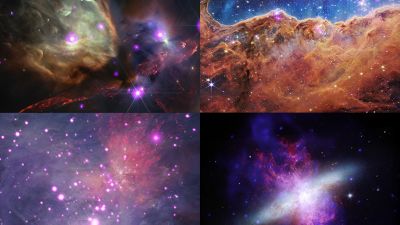
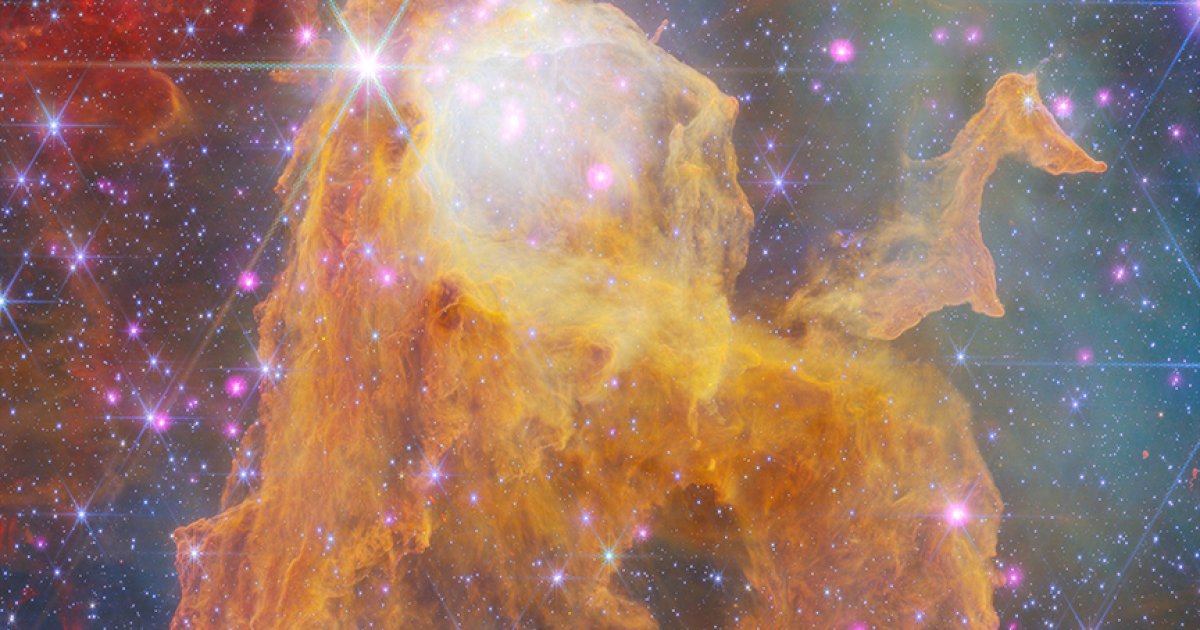
On October 28, 2026, the Chandra X-ray Observatory unveiled its latest celestial discovery: the 'Ghost' of Carina. This cometary globule, located approximately 7,500 light-years away in the Carina Nebula, presents a fascinating insight into the processes of star formation. Captured in stunning detail, the globule is a composite of X-ray data from Chandra's Advanced CCD Imaging Spectrometer (ACIS), infrared observations from the James Webb Space Telescope (JWST), and optical data from the Cerro Tololo Inter-American Observatory (CTIO).
Unveiling Young Stars Through X-ray Vision
The Chandra X-ray Observatory plays a pivotal role in revealing the hidden young stars within the 'Ghost' of Carina. X-rays are particularly effective in penetrating the dense clouds of gas and dust that often obscure young stars in visible light. In the Chandra images, these young stars appear as bright magenta spots, indicating high-energy processes associated with stellar birth and early development. The X-ray emissions are typically generated by the hot outer layers of young stars and their interactions with surrounding material.
Sculpting the Ghostly Form
The unique shape of the 'Ghost' of Carina—a hooded head and a cape-like tail—has been sculpted by the intense radiation from nearby massive stars, including the famous Eta Carinae. This massive star, along with others in the region, emits powerful stellar winds and ultraviolet radiation. These forces compress and erode the surrounding gas and dust, shaping the globule into its distinctive form. Scientists estimate that such interactions are critical in triggering the collapse of gas clouds, leading to the formation of new stars.
Stellar Cradles: The Role of Cometary Globules
Cometary globules like the 'Ghost' of Carina are often referred to as stellar cradles. These regions are rich in the raw materials necessary for star formation. The dense, cold cores of these globules provide the perfect environment for the gravitational collapse of gas and dust, eventually leading to the birth of new stars. The presence of young stars within the 'Ghost' of Carina is a testament to its role as a stellar nursery, where the cycle of star birth continues.
Implications for Understanding Star Formation
The study of the 'Ghost' of Carina offers valuable insights into the complex processes of star formation. By combining data from multiple wavelengths—X-ray, infrared, and optical—astronomers can piece together a more comprehensive picture of how massive stars influence their surroundings and how new stars emerge from the remnants of older stellar generations. This multi-faceted approach enhances our understanding of the lifecycle of stars and the dynamic environments in which they form.
For more detailed information, you can explore the Chandra X-ray Observatory's official release and blog post on this discovery.