Hubble image archive
Cat’s Head Nebula (Hubble WFC3 Image)
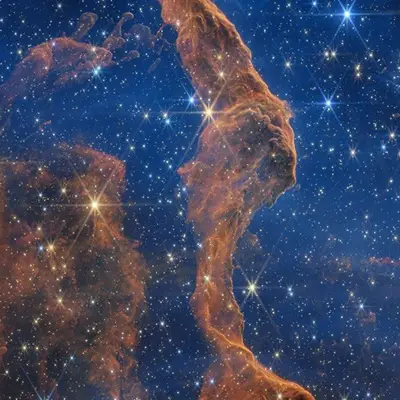
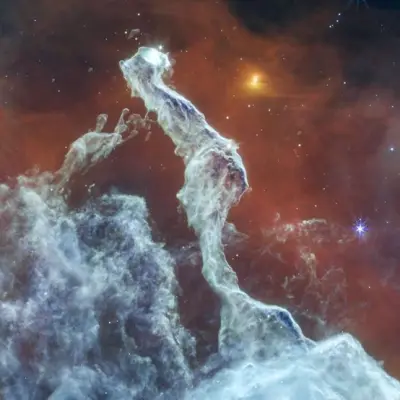
The Cat’s Head Nebula in visible light by NASA’s Hubble Space Telescope. The nebula is an opaque, dark brown pillar of dust. The cat’s glowing red eye may indicate a young star embedded in the dust. The nebula’s right side has a hazy yellow outline, consistent with an illuminated...
- Date
- Oct 29, 2026
- Mission
- Hubble Space Telescope
- Archive ID
- cats-head-nebula-hubble-wfc3-image

The Cat’s Head Nebula in visible light by NASA’s Hubble Space Telescope. The nebula is an opaque, dark brown pillar of dust. The cat’s glowing red eye may indicate a young star embedded in the dust. The nebula’s right side has a hazy yellow outline, consistent with an illuminated, ionized rim where a process known as photoevaporation may occur. During this process, energetic ultraviolet light impinges on the gas, heating it up and essentially evaporating it.
The background changes from blue and cyan above the pillar to yellow, orange, and red farther down. Hubble’s filters record scattered starlight along with light emitted from oxygen, hydrogen, and sulfur. Differences in gas excitation, absorption by dust, and illumination all contribute to the changing colors.
Arcs of material toward the bottom may have been shaped by ultraviolet radiation and stellar winds from massive stars. Many small stars, and some larger stars with Hubble’s characteristic four-point diffraction spikes, are scattered in the background and foreground.
Deep Zoom Image
Dive deeper into this image.
Image Details
About the Object
| R.A. Position | 10:45:59.76 |
|---|---|
| Dec. Position | -60:06:23.76 |
| Constellation | Carina |
| Distance | 7,500 - 8,500 light-years |
| Dimensions | Image is 2.4 arcmin across; about 5.5 light-years |
About the Data
| Data Description | These images were created with Hubble data from proposal: 18206 (C. Britt) |
|---|---|
| Instrument | WFC3/UVIS |
| Exposure Dates | January 15, 2026 |
| Filters | F475W, F502N, F657N, F673N, F814W |
Downloads
Source
Image and source material are credited to the official mission archive linked below.
View on NASA.gov