Hubble image archive
Journey through the Orion Nebula
This image depicts a vast canyon of dust and gas in the Orion Nebula from a 3-D computer model based on observations by NASA's Hubble Space Telescope and created by science visualization specialists at the Space Telescope Science Institute (STScI) in Baltimore, Md. A 3-D visualiz...
- Date
- Jan 1, 2010
- Mission
- Hubble Space Telescope
- Archive ID
- hubblesite-images-2010-12-2705-image

This image depicts a vast canyon of dust and gas in the Orion Nebula from a 3-D computer model based on observations by NASA's Hubble Space Telescope and created by science visualization specialists at the Space Telescope Science Institute (STScI) in Baltimore, Md. A 3-D visualization of this model takes viewers on an amazing four-minute voyage through the 15-light-year-wide canyon.
During the ride, viewers see bright gaseous clouds, dark nebulae, embryonic planetary systems, and thousands of stars, including a grouping of bright, hefty stars called the Trapezium. The tour ends with a detailed look at a young circumstellar disk, which is much like the structure from which our solar system formed 4.5 billion years ago.
Based on a Hubble image of Orion released in 2006, the 3-D visualization was a collaborative effort between science visualization specialists at STScI, including Greg Bacon, who sculpted the Orion Nebula digital model, with input from STScI astronomer Massimo Roberto; the National Center for Supercomputing Applications at the University of Illinois at Urbana-Champaign; and the Spitzer Science Center at the California Institute of Technology in Pasadena.
The Orion journey is one of four scenes that are part of the new 43-minute Imax film "Hubble 3D."
Credits
NASA, G. Bacon, L. Frattare, Z. Levay, and F. Summers (STScI/AURA)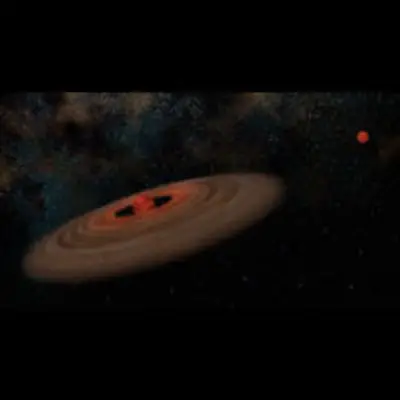
Downloads
Source
Image and source material are credited to the official mission archive linked below.
View on NASA.gov