Webb image archive
TRAPPIST-1 d (Artist’s Concept)
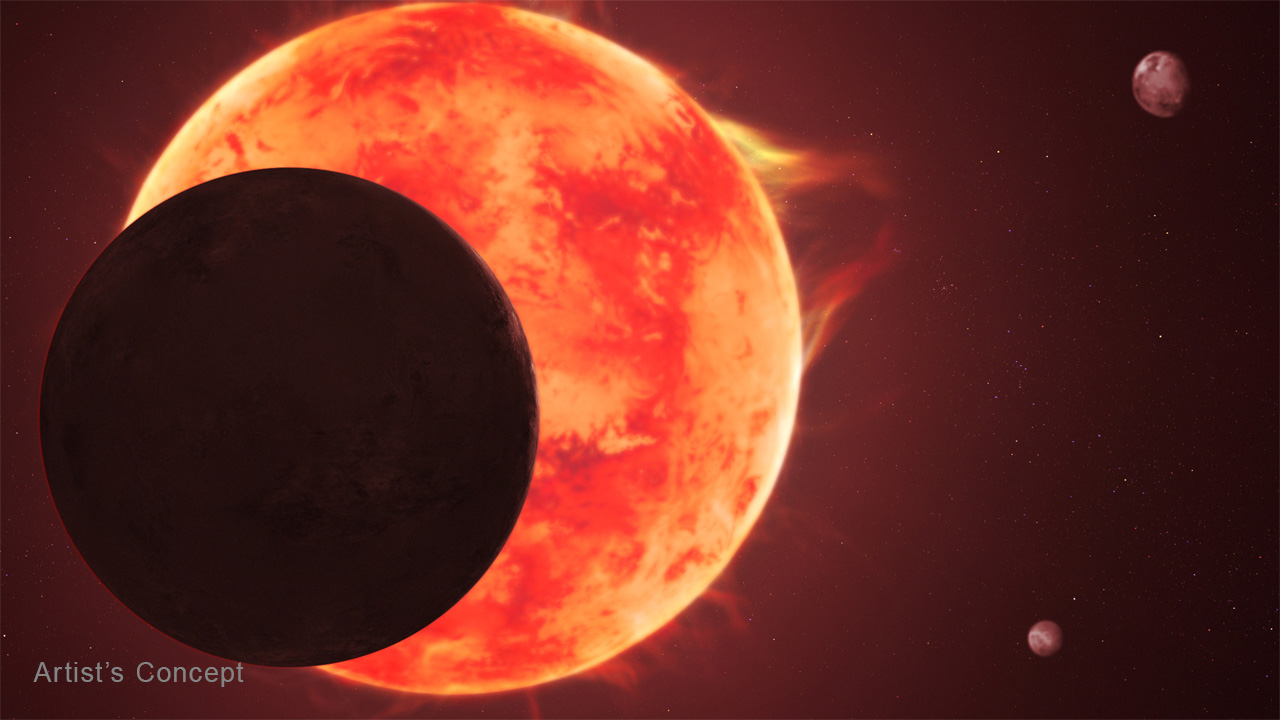
Caption This artist’s concept depicts planet TRAPPIST-1 d passing in front of its turbulent star, with other members of the closely packed system shown in the background. The T...
- Date
- Aug 13, 2025
- Observatory
- James Webb Space Telescope
- Credit
- NASA / ESA / CSA / STScI
- Archive ID
- 01JXCYVV34TX3C9V2QC548CEBJ
Caption
This artist’s concept depicts planet TRAPPIST-1 d passing in front of its turbulent star, with other members of the closely packed system shown in the background.
The TRAPPIST-1 system is intriguing to scientists for a few reasons. Not only does the system have seven Earth-sized rocky worlds, but its star is a red dwarf, the most common type of star in the Milky Way galaxy. If an Earth-sized world can maintain an atmosphere here, and thus have the potential for liquid surface water, the chance of finding similar worlds throughout the galaxy is much higher. In studying the TRAPPIST-1 planets, scientists are determining the best methods for separating starlight from potential atmospheric signatures in data from NASA’s James Webb Space Telescope. The star TRAPPIST-1’s variability, with frequent flares, provides a challenging testing ground for these methods.
Credits
Illustration
NASA, ESA, CSA, Joseph Olmsted (STScI)