Artemis II image archive
art002e010014 (April 6, 2026) – A bright portion of the Moon is visible in this image. If you look closely,...
art002e010014 (April 6, 2026) – A bright portion of the Moon is visible in this image. If you look closely, you can see linear, pitted features known as “crater chains” radiating from the Orientale basin, an impact crater with a patch of ancient lava at its center, visible in the...
- Date
- Apr 10, 2026
- Mission
- Artemis II
- Archive ID
- amf-art002e010014
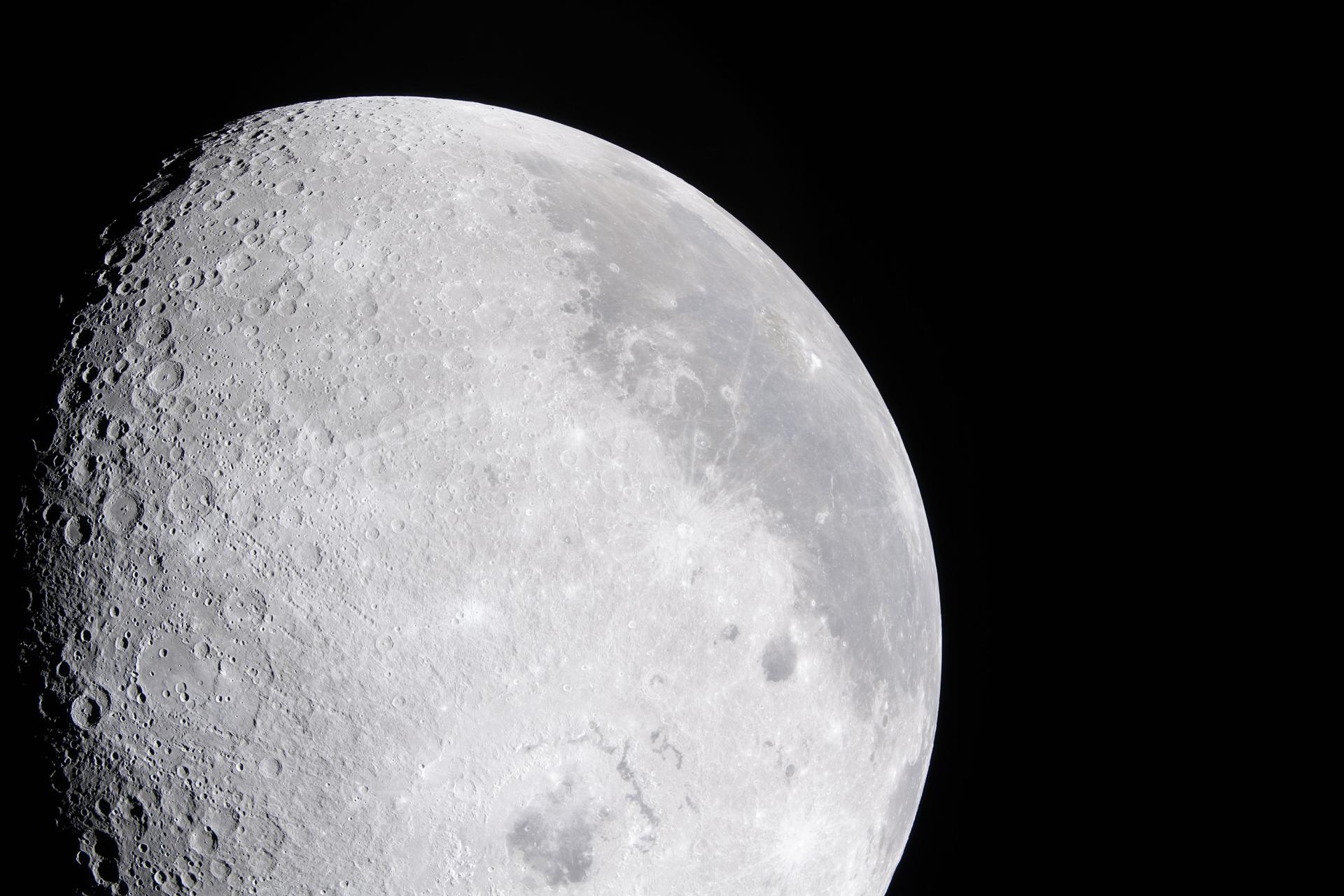
art002e010014 (April 6, 2026) – A bright portion of the Moon is visible in this image. If you look closely, you can see linear, pitted features known as “crater chains” radiating from the Orientale basin, an impact crater with a patch of ancient lava at its center, visible in the bottom center of the image. These crater chains formed about 3.8 billion years ago, when rocks spewed from the collision that formed Orientale landed in lines extending away from the crater. These chains are found near other large craters on the Moon, but we don’t get to see them on Earth because our planet’s crust has been turned over so many times through plate tectonics and largely erased by rain, wind, and ice. In the upper left corner of the Moon disk is a line called the terminator, the boundary between lunar day and night. Here, low-angle sunlight skims the surface, casting dramatic shadows that expose the area’s topography — or the shape of its surface. Glushko crater is the bright spot just to the left of the dark mare, or “sea” of ancient lava flows on the near side of the Moon. It’s identifiable by the bright rays that shoot across the mare, some hundreds of miles away. These rays are made of ejected material after the collision that formed Glushko. Glushko and its rays are brighter than the surrounding area because that younger has experienced less weathering from radiation and impacts. Oceanus Procellarum, the largest lava-filled region on the Moon, spans the horizon. The Aristarchus crater, the bright spot in the sea of lava, creeps toward the right edge of the Moon.
More Images From This Period
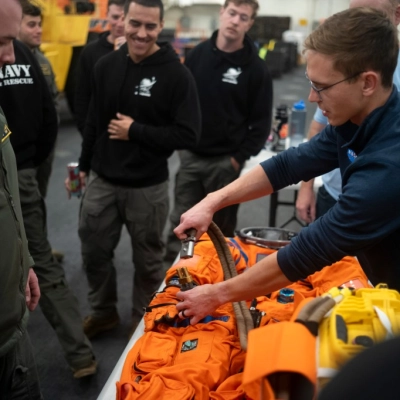
Nicholas Houghton, an Orion Crew Survival System engineer at NASA’s Johnson Space Center, left, conducts familiarization training with the Orion...
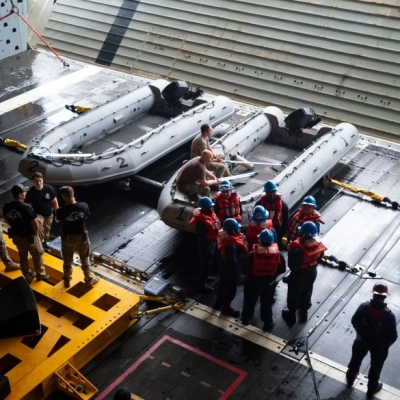
U.S. Navy personnel are seen in the well deck of USS John P. Murtha as they prepare equipment for the...
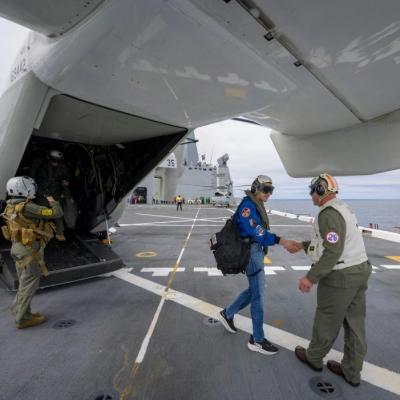
NASA Administrator Jared Isaacman, left, is greeted by Capt. Erik Kenny, commanding officer, USS John P. Murtha (LPD, after a...
Downloads
Source
Image and source material are credited to the official mission archive linked below.
View on NASA.gov