Introduction to AT 2016blu
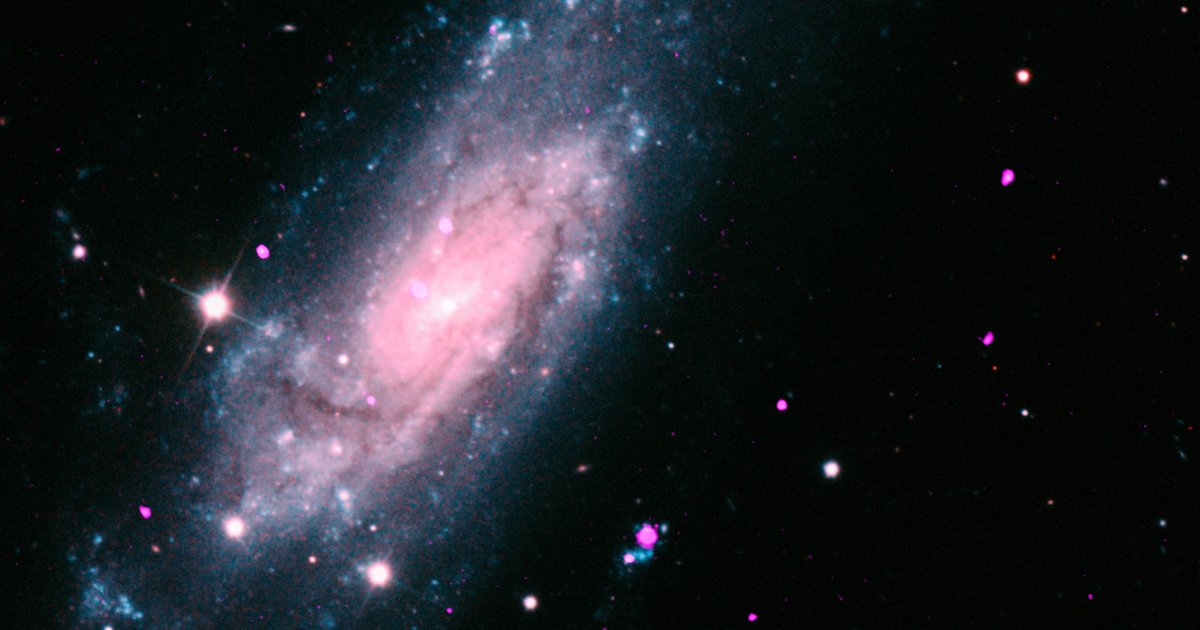
AT 2016blu, a fascinating celestial object located in the galaxy NGC 4559, has captivated astronomers due to its unusual behavior. Often referred to as a 'supernova impostor,' this luminous blue variable (LBV) star has exhibited a series of dramatic outbursts since 2012. Situated approximately 30 million light-years away, AT 2016blu has been the subject of intense study, particularly with the help of the Chandra X-ray Observatory.
Chandra's 2026 Observations
In March 2026, the Chandra X-ray Observatory provided new insights into AT 2016blu, revealing that it was about 100 times more X-ray luminous than during its initial observations in 2001-2002. This significant increase in X-ray brightness suggests dynamic interactions within the system, potentially involving a hidden companion, such as a neutron star or a black hole. The Chandra data, as reported by Chandra's official site, highlights the importance of X-ray observations in understanding such complex systems.
The 113-Day Periastron Cycle
AT 2016blu's behavior is characterized by a 113-day cycle, believed to be driven by periastron passages within its binary system. During these close encounters, the LBV transfers approximately 2.7% of Earth's mass to its companion, significantly affecting the system's dynamics. Scientists estimate that these interactions are responsible for the observed X-ray outbursts, as material accreted onto the companion releases energy in the form of X-rays.
The Enigmatic Companion
The identity of AT 2016blu's companion remains a mystery, though evidence suggests it could be a neutron star or a black hole. The dramatic increase in X-ray brightness observed by Chandra supports the presence of a compact object, capable of accreting material and emitting intense X-rays. Further observations and modeling are necessary to confirm the nature of this companion.
AT 2016blu's Outbursts
Since 2012, AT 2016blu has experienced 27 recorded outbursts. These events are not typical of supernovae, hence the 'impostor' designation. Instead, they represent episodic mass ejections from the LBV, likely triggered by gravitational interactions with its companion. The regularity and intensity of these outbursts offer a unique opportunity for astronomers to study mass transfer and accretion processes in binary systems.
Implications for Stellar Evolution
The study of AT 2016blu provides valuable insights into the life cycles of massive stars and their interactions within binary systems. Understanding these processes is crucial for constructing accurate models of stellar evolution and predicting the end stages of massive stars. The findings from Chandra's observations contribute to a broader understanding of how such systems evolve and the role of compact objects in their dynamics.
Conclusion
Chandra's 2026 observations of AT 2016blu have significantly advanced our understanding of this intriguing supernova impostor. The dramatic increase in X-ray brightness, coupled with the regularity of its outbursts, underscores the complex interactions within this binary system. As astronomers continue to study AT 2016blu, they hope to unravel the mysteries of its hidden companion and the processes driving its extraordinary behavior. For more detailed information, readers can refer to the Universe Today article on this topic.