Introduction to IC 348 and the JWST's Findings
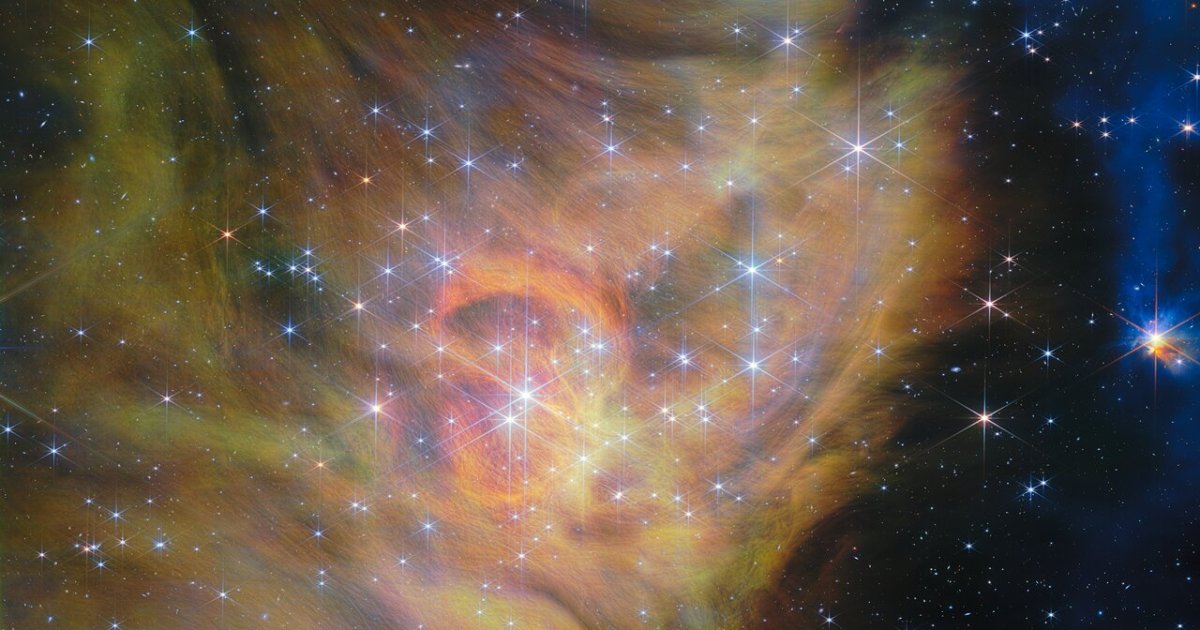
The James Webb Space Telescope (JWST) has recently turned its powerful gaze towards IC 348, a star-forming cluster located in the Perseus constellation, approximately 1,000 light-years from Earth. Using its Near-Infrared Camera (NIRCam) and Near-Infrared Spectrograph (NIRSpec), the JWST has provided a dynamic panorama of this stellar nursery, revealing intriguing insights into the nature of brown dwarfs and the processes of star formation.
Discovering the Least Massive Brown Dwarfs
Among the most groundbreaking discoveries in IC 348 are the identification of the least massive brown dwarfs known to date. These substellar objects, with masses as low as about 2 Jupiter masses, represent only 0.19% of the Sun's mass. Such discoveries push the boundaries of our understanding of the low-mass limit of star formation. Brown dwarfs are often referred to as 'failed stars' because they lack the mass necessary to sustain hydrogen fusion in their cores, a defining characteristic of true stars.
The detection of these ultra-low-mass brown dwarfs challenges existing models of star formation, suggesting that the processes that lead to the formation of stars and brown dwarfs might be more similar than previously thought. The presence of these objects in IC 348 indicates that the conditions within this cluster are conducive to the formation of both stars and substellar objects across a broad range of masses.
The Role of NIRCam and NIRSpec
JWST's NIRCam was instrumental in capturing detailed images of IC 348, allowing astronomers to identify and study these faint brown dwarfs. Meanwhile, NIRSpec provided critical spectral data that helped determine their masses and compositions. This combination of imaging and spectroscopy is crucial for understanding the physical characteristics of these objects and their formation history.
Unexpected Features: Dust Disks and Hydrocarbons
One of the brown dwarfs identified in IC 348 was found to have a surrounding dust disk. This discovery is significant because it suggests that even objects at the lower end of the mass spectrum can host disks, which are typically associated with planet formation. The presence of such a disk raises intriguing questions about the potential for planet formation around brown dwarfs, even those with extremely low masses.
Additionally, the spectral analysis revealed an unidentified hydrocarbon feature. While the exact nature of this feature remains uncertain, it points to complex chemical processes occurring in the atmospheres of these brown dwarfs. Understanding these processes could provide further insights into the atmospheric chemistry of substellar objects and their potential for hosting prebiotic molecules.
Implications for the Low-Mass Limit of Star Formation
The discoveries in IC 348 have profound implications for our understanding of the low-mass limit of star formation. The existence of brown dwarfs with masses as low as 2 Jupiter masses suggests that the processes governing star formation can extend to much lower masses than previously believed. This challenges the traditional view that there is a clear distinction between the formation of stars and brown dwarfs.
Scientists estimate that these findings could lead to a reevaluation of the criteria used to define the boundary between stars and brown dwarfs. Furthermore, the presence of dust disks around such low-mass objects indicates that the potential for planet formation might be more widespread than assumed, extending even to the smallest members of the stellar population.
Conclusion
The JWST's observations of IC 348 have opened a new window into the study of brown dwarfs and the processes of star formation. By uncovering the least massive brown dwarfs known, the telescope has provided valuable data that challenge existing models and expand our understanding of the universe. As the JWST continues its mission, it promises to reveal even more about the complexities of star formation and the diverse range of objects that populate our galaxy.