Euclid's Remarkable Discovery
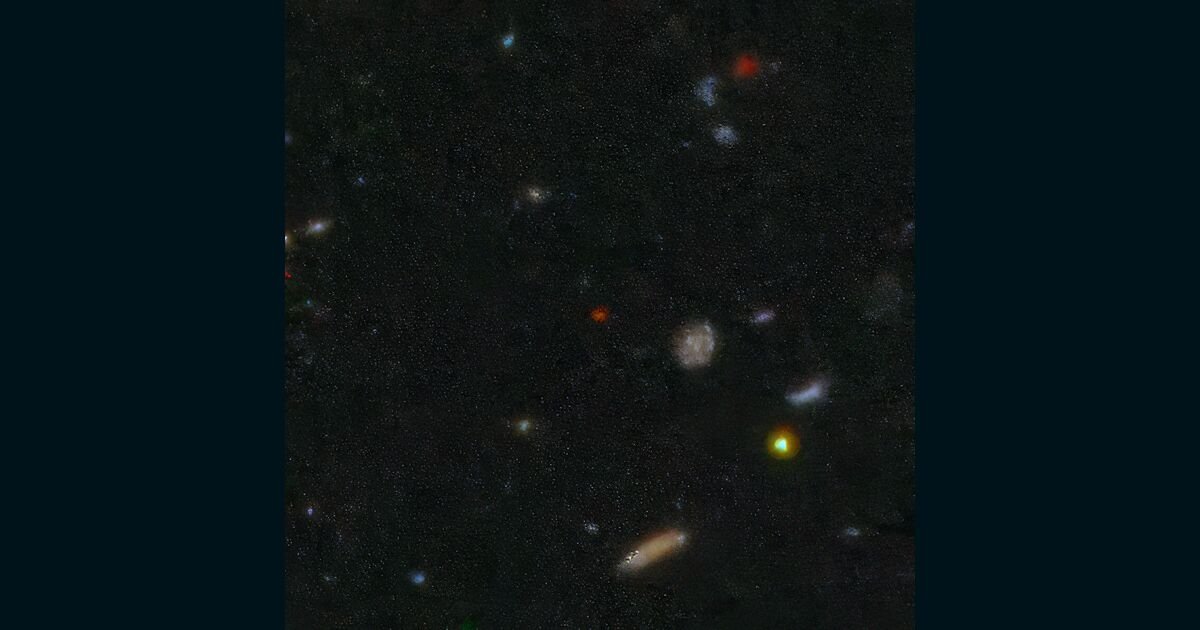
The European Space Agency's Euclid mission has achieved a groundbreaking discovery by identifying quasar J1504+6252, also known as 'Dun Aonghasa,' at a redshift of 8.13. This remarkable finding places the quasar just 630 million years after the Big Bang, making it the first quasar found beyond a redshift of 8. This discovery highlights Euclid's powerful capabilities in surveying the distant universe.
Euclid's Infrared Survey
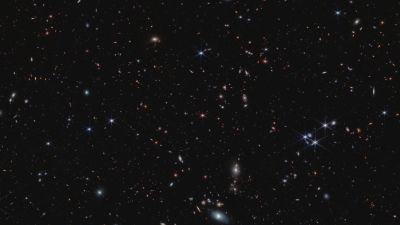
Euclid's wide-field infrared survey, conducted over 18 months, was instrumental in identifying this ancient quasar. The mission's ability to capture infrared light allows it to peer through cosmic dust and detect objects at extreme distances. This capability is critical for finding quasars like J1504+6252, which are among the most luminous and distant objects in the universe.
Follow-up Observations
After Euclid's initial discovery, several other observatories conducted follow-up observations to confirm and study the quasar. The Keck Observatory, Large Binocular Telescope (LBT), Hubble Space Telescope, and James Webb Space Telescope (JWST) all contributed to a deeper understanding of J1504+6252. These observations provided crucial data on the quasar's properties, including its luminosity, spectral characteristics, and the mass of its central black hole.
The Role of the Keck and LBT Observatories
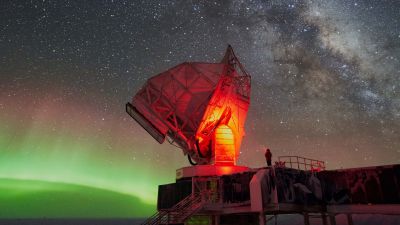
The Keck Observatory and LBT played pivotal roles in spectroscopic follow-up, confirming the redshift and providing detailed insights into the quasar's composition. These observations helped determine the quasar's redshift with precision, validating Euclid's initial findings.
Hubble and Webb's Contributions
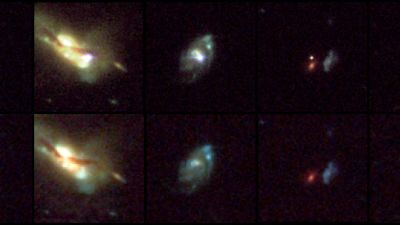
The Hubble Space Telescope's high-resolution imaging offered a closer look at the quasar's host galaxy, while the JWST's advanced instruments provided further details on the quasar's environment and the early universe's conditions. These combined efforts have painted a comprehensive picture of J1504+6252 and its significance in cosmic history.
Implications for Early Black Hole Growth
The discovery of J1504+6252 has profound implications for our understanding of black hole growth in the early universe. Scientists estimate that the quasar is powered by a supermassive black hole with a mass of approximately 360 million solar masses. This finding raises questions about how such massive black holes could form and grow so quickly after the Big Bang.
Understanding the mechanisms behind rapid black hole growth is a key focus of current astrophysical research. The existence of such a massive black hole at this early epoch suggests that black holes may grow more efficiently than previously thought, possibly through mechanisms such as direct collapse or rapid accretion.
Conclusion
Euclid's discovery of quasar J1504+6252 at redshift 8.13 marks a significant milestone in cosmology. By pushing the boundaries of our observational capabilities, Euclid and its supporting telescopes have provided invaluable insights into the early universe and the enigmatic processes that drive black hole growth. As we continue to explore these distant frontiers, each new discovery brings us closer to understanding the universe's formative epochs.