Archivo de imágenes de Hubble
Meseta de Aristarco en luz ultravioleta
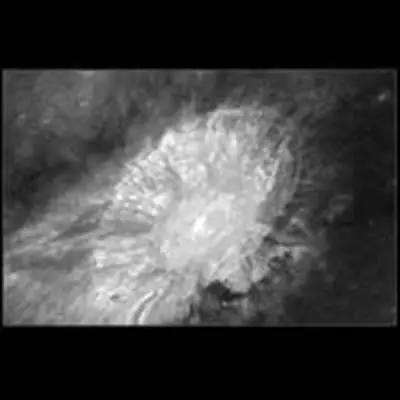
The Hubble Space Telescope Advanced Camera for Surveys imaged Aristarchus crater and nearby Schroter's Valley rille on Aug. 21, 2005. The Hubble images reveal fine-scale details of the crater's interior and exterior in ultraviolet and visible wavelengths at a scale of approximate...
- Fecha
- Jan 1, 2005
- Misión
- Hubble Space Telescope
- ID de archivo
- hubblesite-images-2005-29-1777-image

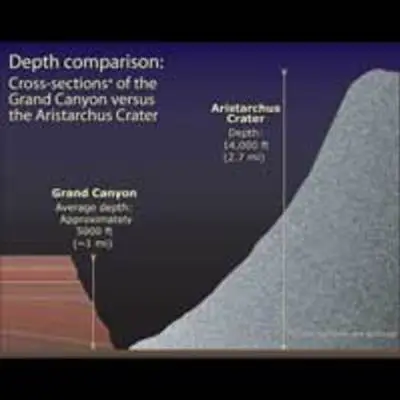
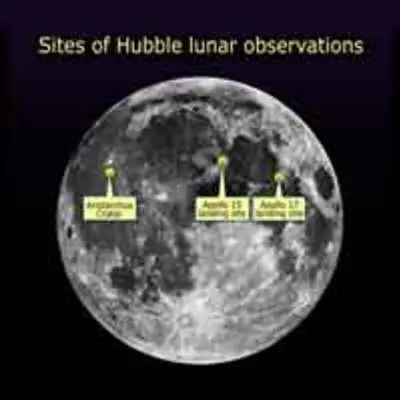
The Hubble Space Telescope Advanced Camera for Surveys imaged Aristarchus crater and nearby Schroter's Valley rille on Aug. 21, 2005. The Hubble images reveal fine-scale details of the crater's interior and exterior in ultraviolet and visible wavelengths at a scale of approximately 165 to 330 feet (50 to 100 meters) per picture element. Aristarchus crater is 26 miles (42 kilometers) in diameter and approximately 2 miles (3.2 kilometers) in depth, and sits at the southeastern edge of the Aristarchus plateau. The plateau is noted for its rich array of geologic features, including a dense concentration of lunar volcanic rilles (river-valley-like landforms that resulted from the collapse of lunar lava tubes), source vents, and volcanic materials that erupted in giant explosive events. Aristarchus is one of the youngest large craters on the Moon. It probably formed between 100 and 900 million years ago.
Credits
NASA, ESA, and J. Garvin (NASA/GSFC)Detalles de la imagen
| About The Object | |
|---|---|
| Object Name | moon |
| Object Description | Earth's Satellite |
| Distance | The Moon is 238,857 miles (384,403 kilometers) from the Earth. |
| Dimensions | The Moon has a diameter of 2160 miles (3476 kilometers). |
| About The Data | |
| Data Description | These HST data are from proposal . NASA's HST Lunar observation team is led by Chief Scientist J. Garvin. The team includes M. Robinson (Northwestern Univ.), D. Skillman (NASA/GSFC), B. Hapke (Univ. of Pittsburgh), C. Pieters (Brown Univ.), M. Ulmer (Northwestern Univ.), J. Bell (Cornell Univ.), and J. Taylor (Univ. of Hawaii). |
| Instrument | HST>ACS/HRC |
| Exposure Dates | August 21, 2005 |
| Filters | F250W (250nm), F344N (344nm), F502N (502nm), F658N (658nm) |
Descargas
Fuente
La imagen y el material de referencia se acreditan al archivo oficial de la misión enlazado a continuación.
Ver en NASA.gov