Archivo de imágenes de Hubble
Una vista de primer plano del cráter Aristarco
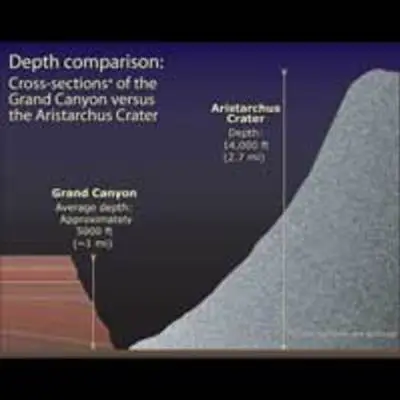
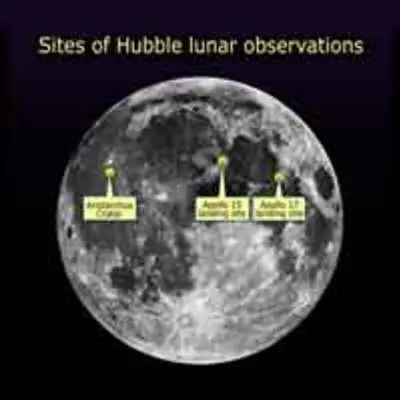
The Hubble Space Telescope's Advanced Camera for Surveys snapped this close-up view of the Aristarchus crater on Aug. 21, 2005. The crater is 26 miles (42 kilometers) in diameter and approximately 2 miles (3.2 kilometers) in depth, and sits at the southeastern edge of the Aristar...
- Fecha
- Jan 1, 2005
- Misión
- Hubble Space Telescope
- ID de archivo
- hubblesite-images-2005-29-1782-image

The Hubble Space Telescope's Advanced Camera for Surveys snapped this close-up view of the Aristarchus crater on Aug. 21, 2005. The crater is 26 miles (42 kilometers) in diameter and approximately 2 miles (3.2 kilometers) in depth, and sits at the southeastern edge of the Aristarchus Plateau. Aristarchus is one of the youngest and largest craters on the Moon. The crater formed between 100 and 900 million years ago.
Credits
Credit: NASA, ESA, and J. Garvin (NASA/GSFC)Detalles de la imagen
| About The Object | |
|---|---|
| Object Name | Moon |
| Object Description | Earth's Satellite |
| Distance | The Moon is 238,857 miles (384,403 kilometers) from the Earth. |
| Dimensions | The Moon has a diameter of 2160 miles (3476 kilometers). |
| About The Data | |
| Data Description | These HST data are from proposal . NASA's HST Lunar observation team is led by Chief Scientist J. Garvin. The team includes M. Robinson (Northwestern Univ.), D. Skillman (NASA/GSFC), B. Hapke (Univ. of Pittsburgh), C. Pieters (Brown Univ.), M. Ulmer (Northwestern Univ.), J. Bell (Cornell Univ.), and J. Taylor (Univ. of Hawaii). |
| Instrument | HST>ACS/HRC |
| Exposure Dates | August 21, 2005 |
Descargas
Fuente
La imagen y el material de referencia se acreditan al archivo oficial de la misión enlazado a continuación.
Ver en NASA.gov