Archivo de imágenes de Hubble
El estudio del cielo profundo del telescopio espacial Hubble revela galaxias embrionarias
This is a selection of images of unusual galaxies discovered during a serendipitous sky survey with the Wide Field Camera onboard NASA's Hubble Space Telescope (Ht1). This is a color composite of two images taken at different wavelengths: visible light (yellow) and near infrared...
- Fecha
- Jan 1, 1992
- Misión
- Hubble Space Telescope
- ID de archivo
- hubblesite-images-1992-19-71-image

This is a selection of images of unusual galaxies discovered during a serendipitous sky survey with the Wide Field Camera onboard NASA's Hubble Space Telescope (Ht1). This is a color composite of two images taken at different wavelengths: visible light (yellow) and near infrared (red).
The individual galaxies are estimated to be between three and ten billion light-years away. HST's high resolution reveals that they have unusual irregular shapes which are not like the familiar spiral and elliptical galaxies in the nearby universe. One idea is that the fragmentary galaxies are interacting, as evident in some of the images which show apparent mergers. The objects resolved by HST may be the "building blocks" for today's large galaxies.
The HST's Medium-Deep "Parallel" survey is carried out using HST's Wide Field Camera to take pictures in a random field while another HST instrument conducts a "primary" observation of a different celestial target". These results may lead to a much clearer understanding of the origin and evolution of galaxies.
The Survey is led at Johns Hopkins University and the Space Telescope Science Institute, in collaboration with 12 astronomers in the United States, 'he United Kingdom, and one from Serendip.
Credits
R. Griffiths (STSCI/ JHU), and NASA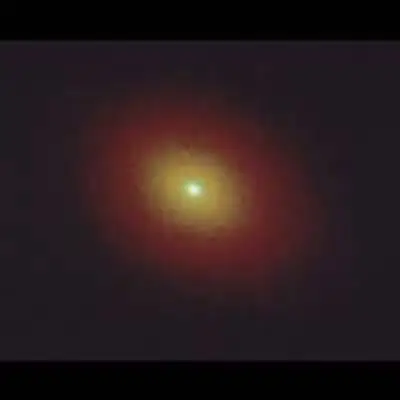
Descargas
Fuente
La imagen y el material de referencia se acreditan al archivo oficial de la misión enlazado a continuación.
Ver en NASA.gov