Archivo de imágenes de Hubble
Galaxias anfitrionas de supernovas ricas en calcio
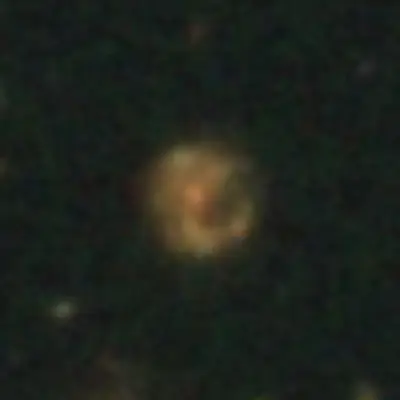
These Hubble Space Telescope images show elliptical galaxies with dark, wispy dust lanes, the signature of a recent galaxy merger. The dust is the only relic of a smaller galaxy that was consumed by the larger elliptical galaxy.The "X" in the images marks the location of supernov...
- Fecha
- Jan 1, 2015
- Misión
- Hubble Space Telescope
- ID de archivo
- hubblesite-images-2015-28-3615-image

These Hubble Space Telescope images show elliptical galaxies with dark, wispy dust lanes, the signature of a recent galaxy merger. The dust is the only relic of a smaller galaxy that was consumed by the larger elliptical galaxy.
The "X" in the images marks the location of supernova explosions that are associated with the galaxies. Each supernova may have been gravitationally kicked out of its host galaxy by a pair of central supermassive black holes. When two galaxies merge, so do their supermassive black holes. Astronomers suggest the supernovae were stars that were once part of double-star systems. These systems wandered too close to the binary black holes, which ejected them from their galaxies. Eventually, the stars in each system moved close enough together to trigger a supernova blast.
These outcast supernovae are located at various distances from their home galaxies. SN 2000ds (left) is at least 12,000 light-years from its galaxy, NGC 2768; SN 2005cz (right) is at least 7,000 light-years from its galaxy, NGC 4589. NGC 2768 resides 75 million light-years from Earth, and NGC 4589 is 108 million light-years away.
The supernovae are part of a census of 13 supernovae to determine why they detonated outside the cozy confines of galaxies. The study is based on archived images made by several telescopes, including Hubble.
Both galaxies were observed by Hubble's Advanced Camera for Surveys. The image of NGC 4589 was taken on Nov. 11, 2006, and the image of NGC 2768 on May 31, 2002.
Credits
NASA, ESA, and R. Foley (University of Illinois)Detalles de la imagen
| About The Object | |
|---|---|
| Object Name | NGC 2768, and NGC 4589 |
| Object Description | Elliptical galaxies |
| About The Data | |
| Data Description | Data were obtained from the HST proposals PI: H. Ford (JHU) et al., and and PI: S. Smartt (Queen's University of Belfast) et al. |
| Instrument | HST>ACS/WFC |
| Exposure Dates | NGC 2768: May 31, 2002, and January 14, 2003; NGC 4589: November 11, 2006 |
| Filters | F435W (B), F555W (V), and F814W (I) |
| About The Image | |
| Color Info | This image is a composite of separate exposures acquired by the ACS/WFC instrument. Several filters were used to sample various wavelengths. The color results from assigning different hues (colors) to each monochromatic (grayscale) image associated with an individual filter. In this case, the assigned colors are: Blue: F435W (B) Green: F555W (V) Red: F814W (I) |
Descargas
Fuente
La imagen y el material de referencia se acreditan al archivo oficial de la misión enlazado a continuación.
Ver en NASA.gov