Archivo de imágenes de Hubble
Cuásares en galaxias en interacción
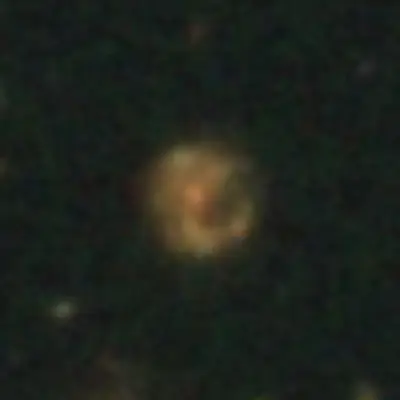
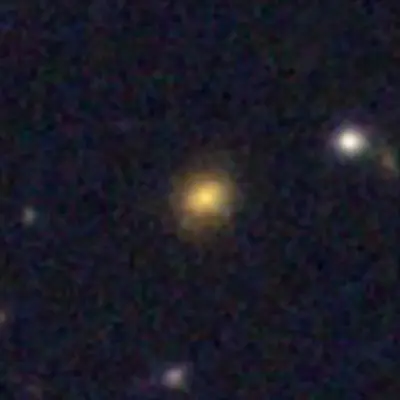
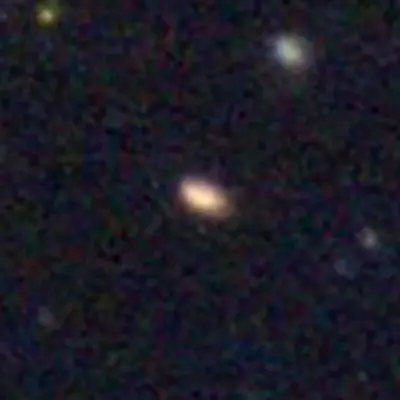
[Top Row]This is a selection of photos from a Hubble Space Telescope survey of 11 ultra-bright quasars that existed at the peak of the universe's star-formation era, which was 12 billion years ago. The quasars (powered by supermassive black holes) are so compact and bright they m...
- Fecha
- Jan 1, 2015
- Misión
- Hubble Space Telescope
- ID de archivo
- hubblesite-images-2015-20-3569-image

[Top Row]
This is a selection of photos from a Hubble Space Telescope survey of 11 ultra-bright quasars that existed at the peak of the universe's star-formation era, which was 12 billion years ago. The quasars (powered by supermassive black holes) are so compact and bright they make a diffraction-spike pattern in the telescope's optics – an optical artifact typically only produced by bright nearby stars. Despite their brightness, the quasars are actually dimmed by dusty gas around them. The infrared capability of Hubble's Wide Field Camera 3 was able to probe deeply into the material around the quasars.
[Bottom Row]
When the glare of the quasar is subtracted, researchers see evidence for collisions between galaxies. The collisions and mergers gave birth to the quasars by fueling the supermassive black hole at the core of the galaxies. The new images capture the dust-clearing transitional phase in the merger-driven quasar birth. These observations show that the brightest quasars in the universe live in merging galaxies.
Credits
NASA, ESA, and E. Glikman (Middlebury College, Vermont)Detalles de la imagen
| About The Object | |
|---|---|
| Object Description | Dust-Reddened Quasars |
| Distance | Redshifts: Between 1.7 and 2.3 |
| About The Data | |
| Data Description | Data were obtained from the HST proposals , PI: E. Glikman (Middlebury College) et al. The science team comprises:T E. Glikman (Middlebury College), B. Simmons (University of Oxford), M. Mailly (Middlebury College), K. Schawinski (Institute for Astronomy, ETH Zurich), C.M. Urry (Yale University), and M. Lacy (NRAO Charlottesville). |
| Instrument | HST>WFC3/IR |
| Exposure Dates | September 2012 through June 2013 |
| Filters | F105W (Y), F125W (J), and F160W (H) |
| About The Image | |
| Color Info | These images are composites of separate exposures acquired by the WFC3 instruments on the Hubble Space Telescope. Several filters were used to sample broad wavelength ranges. The color results from assigning different hues (colors) to each monochromatic (grayscale) image associated with an individual filter. In this case, the assigned colors are: Blue: F105W (Y) or F125W (J), Orange: F160W (H) |
Descargas
Fuente
La imagen y el material de referencia se acreditan al archivo oficial de la misión enlazado a continuación.
Ver en NASA.gov