Archivo de imágenes de Hubble
El crecimiento de galaxias similares a la Vía Láctea a lo largo del tiempo
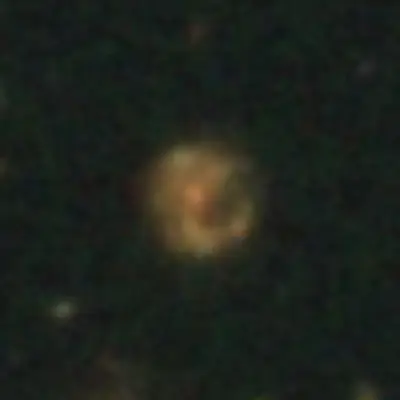
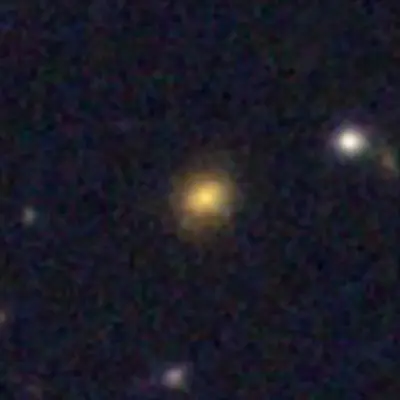
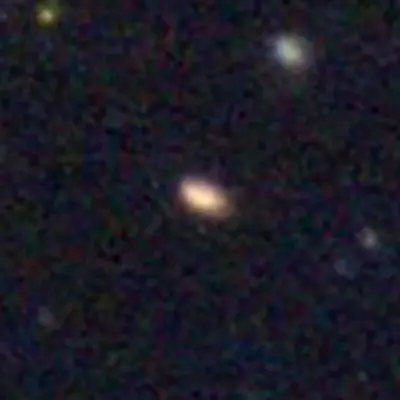
These six snapshots taken by NASA's Hubble Space Telescope show how galaxies similar in mass to our Milky Way evolved over time.The images reveal that Milky Way-like galaxies grow larger in size and in stellar mass over billions of years. The image at far right reveals a compact,...
- Fecha
- Jan 1, 2015
- Misión
- Hubble Space Telescope
- ID de archivo
- hubblesite-images-2015-11-3516-image

These six snapshots taken by NASA's Hubble Space Telescope show how galaxies similar in mass to our Milky Way evolved over time.
The images reveal that Milky Way-like galaxies grow larger in size and in stellar mass over billions of years. The image at far right reveals a compact, youthful galaxy as it looked 11.3 billion years ago, when our universe was only about 2.5 billion years old. The bluish-white glow reveals that the fledgling galaxy is undergoing a wave of star birth, as its rich reservoir of gas compresses under gravity, creating myriad stars. At 10.3 billion years ago (image at center), the firestorm of star birth is reaching its peak. The stellar "baby boom" churned out stars 30 times faster than the Milky Way does today. The galaxy's yellowish color most likely indicates ongoing star formation that is being obscured by dust and gas.
Eventually, the galaxies exhaust their star-making gas. The galaxy at 8.9 billion years ago has developed a spiral shape, and the oldest stars reside in its central region. Nearly 3 billion years later, a similar galaxy has grown even larger. The galaxy is dominated by mostly older stars, which can be seen in its reddish appearance.
These images are part of the most comprehensive multi-observatory galaxy surveys yet. Stretching back in time more than 10 billion years, the census contains nearly 2,000 snapshots of Milky Way-like galaxies.
The images were taken between 2010 and 2012 with Hubble's Wide Field Camera 3 and Advanced Camera for Surveys as part of the Cosmic Assembly Near-infrared Deep Extragalactic Legacy Survey (CANDELS).
Credits
NASA, ESA, C. Papovich (Texas A&M University), H. Ferguson (STScI), S. Faber (University of California, Santa Cruz), and I. Labbé (Leiden University)Detalles de la imagen
| About The Object | |
|---|---|
| Object Name | Milky Way-Mass Galaxies |
| Distance | Redshifts: from z = 0.26 to z = 2.8 |
| About The Data | |
| Data Description | The science findings are based on various Hubble archival observations of galaxy surveys, including COSMOS, CDF–S, UDS, GOODS, and CANDELS. The images were created from Hubble data from proposal , PIs: S. Faber (University of California, Santa Cruz) and H. Ferguson (STScI), et al. The science team includes: C. Papovich (Mitchell Inst./Texas A&M U.), I. Labbé (Leiden Obs.), R. Quadri and V. Tilvi (Mitchell Inst./Texas A&M U.), E.F. Bell (U. Michigan, Ann Arbor), K. Glazebrook (CAS/Swinburne U.), L. Spitler (Macquarie U., Sydney/ AAO), C.M.S. Straatman (Leiden Obs.), K.-V. Tran (Mitchell Inst./Texas A&M U.), P. Behroozi (STScI), M. Cowley (CAS/Swinburne U.), R. Davé (U. Western Cape/South African Astronomical Obs./African Inst. for Mathematical Sciences, Cape Town), A. Dekel (Hebrew U. of Jerusalem), M. Dickinson (NOAO), H.C. Ferguson (STScI), S.L. Finkelstein (U. Texas, Austin), E. Gawiser (Rutgers U.), H. Inami (NOAO), G. Kacprzak (CAS/Swinburne U.), L. Kawinwanichakij (Mitchell Inst./Texas A&M U.), D. Kocevski (U. Kentucky), A. Koekemoer (STScI), D. Koo (Lick Obs./U. California, Santa Cruz), P. Kurczynski (Rutgers U.), J.M. Lotz (STScI), Y. Lu (Kavli Institute/Stanford U.), R.A. Lucas (STScI), D. Mcintosh (U. Missouri, Kansas City), N. Mehrtens (Mitchell Inst./Texas A&M U.), B. Mobasher (U. California, Riverside), A. Monson (Carnegie Obs.), G. Morrison (IfA/U. Hawaii/CFHT), T. Nanayakkar (CAS/Swinburne U.), S.E. Persson (Carnegie Obs.), B. Salmon (Mitchell Inst./Texas A&M U.), R. Simons (JHU), A. Tomczak (Mitchell Inst./Texas A&M U.), P. van Dokkum (Yale U.), B. Weiner (Steward Obs./U. Arizona), and S.P. Willner (Harvard-Smithsonian Center for Astrophysics). |
| Instrument | HST>ACS/WFC and HST>WFC3/IR |
| Exposure Dates | 2010 – 2012 |
Descargas
Fuente
La imagen y el material de referencia se acreditan al archivo oficial de la misión enlazado a continuación.
Ver en NASA.gov