Archivo de imágenes de Hubble
Nebulosa Cabeza de Caballo (infrarrojos)
The iconic Horsehead Nebula has graced astronomy books ever since its discovery more than a century ago in 1888 by Scottish astronomer Williamina Fleming. The nebula is a favorite target for amateur and professional astronomers alike. Hubble's infrared vision shows it in a dramat...
- Fecha
- Apr 24, 1990
- Misión
- Hubble Space Telescope
- ID de archivo
- hubblesite-images-3869-image

The iconic Horsehead Nebula has graced astronomy books ever since its discovery more than a century ago in 1888 by Scottish astronomer Williamina Fleming. The nebula is a favorite target for amateur and professional astronomers alike. Hubble's infrared vision shows it in a dramatic new light. The nebula, shadowy in optical light, appears transparent and ethereal when seen at infrared wavelengths, represented here with visible shades.
The rich tapestry of the Horsehead Nebula pops out against the backdrop of Milky Way stars and distant galaxies that are easily seen in infrared light. The silhouette of a horse's head and neck pokes up mysteriously from what look like whitecaps of interstellar foam.
The nebula is part of the Orion Molecular Cloud, located about 1,500 light-years away in the constellation Orion. The cloud also contains other well-known objects such as the Great Orion Nebula (M42), the Flame Nebula, and Barnard's Loop. It is one of the nearest and most easily photographed regions in which massive stars are being formed.
In this Hubble image, the backlit wisps along the Horsehead's upper ridge are being illuminated by Sigma Orionis, a young five-star system just out of view. Along the nebula's top ridge, two fledgling stars peek out from their now-exposed nurseries.
Scientists know a harsh ultraviolet glare from one of these bright stars is slowly evaporating the nebula. Gas clouds surrounding the Horsehead already have dissipated, but the tip of the jutting pillar contains a slightly higher density of hydrogen and helium, laced with dust. This casts a shadow that protects material behind it from being stripped away by intense stellar radiation evaporating the hydrogen cloud, and a pillar structure forms.
This pillar of tenuous hydrogen gas laced with dust is resisting being eroded away by the radiation from a nearby star. Astronomers estimate the Horsehead will disintegrate in about 5 million to 10 million years.
Constellation: Orion
Distance: 1,500 light-years
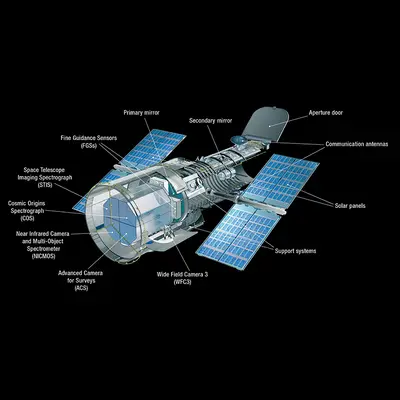
Instrument: Wide Field Camera 3/IR
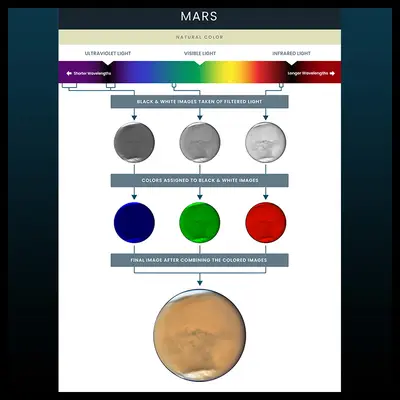
Image Filters: F110W (YJ), F160W (H)
Detalles de la imagen
| About The Object | |
|---|---|
| Object Name | Horsehead Nebula, Barnard 33 |
Descargas
Fuente
La imagen y el material de referencia se acreditan al archivo oficial de la misión enlazado a continuación.
Ver en NASA.gov