Archivo de imágenes de Hubble
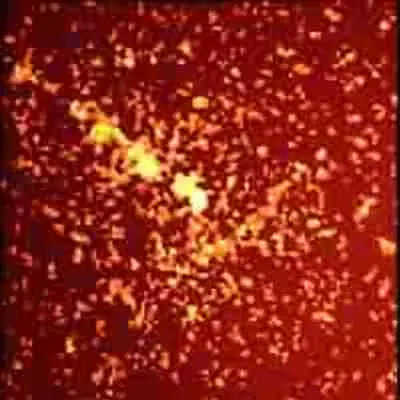
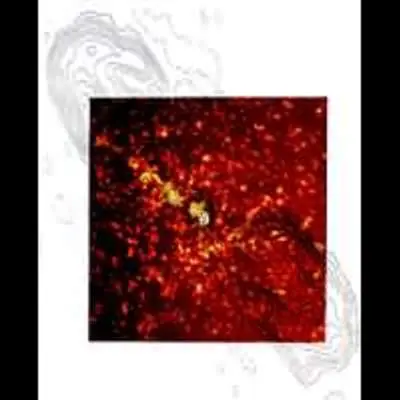
Una galaxia espiral del campo profundo del Hubble en luz visible (izquierda) e infrarroja (derecha)
A galaxy can look quite different in visible vs infrared light. This is a comparison view of a spiral galaxy in the Hubble Deep Field - Hubble Space Telescope's view of the faintest galaxies ever seen in the universe.The galaxy is disk-shaped like our Milky Way and tilted oblique...
- Fecha
- Jan 1, 1998
- Misión
- Hubble Space Telescope
- ID de archivo
- hubblesite-images-1998-32-706-image

A galaxy can look quite different in visible vs infrared light. This is a comparison view of a spiral galaxy in the Hubble Deep Field - Hubble Space Telescope's view of the faintest galaxies ever seen in the universe.
The galaxy is disk-shaped like our Milky Way and tilted obliquely along our line of sight. It is located in the constellation Ursa Major. The smaller clumps in the picture are likely other galaxies.
[Left] In the visible-light picture, taken with the Wide Field and Planetary Camera 2 (WFPC2) in 1995, the galaxy looks uncharacteristically lumpy. That's because only the bright blue knots of starbirth are detected by the WFPC2.
[Right] The underlying disk structure, containing older stars, is seen clearly in this infrared Deep Field image taken with Hubble's Near Infrared Camera and Multi-Object Spectrometer (NICMOS) in January 1998.
These types of comparative observations will help astronomers better understand the evolution of galaxies.
Credits
Rodger I. Thompson (University of Arizona) and NASADetalles de la imagen
| About The Object | |
|---|---|
| Object Name | HDF-N |
| R.A. Position | 12h 36m 48.26s |
| Dec. Position | 62° 13' 1.99" |
Más imágenes de este periodo
Descargas
Fuente
La imagen y el material de referencia se acreditan al archivo oficial de la misión enlazado a continuación.
Ver en NASA.gov