Archivo de imágenes de Hubble
El cúmulo Hodge 301: múltiples generaciones de estrellas en la nebulosa Tarántula
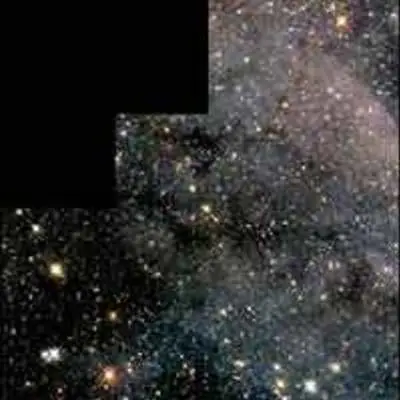
In the most active starburst region in the local universe lies a cluster of brilliant, massive stars, known to astronomers as Hodge 301.Hodge 301, seen in the lower right hand corner of this image, lives inside the Tarantula Nebula in our galactic neighbor, the Large Magellanic C...
- Fecha
- Jan 1, 1999
- Misión
- Hubble Space Telescope
- ID de archivo
- hubblesite-images-1999-12-790-image

In the most active starburst region in the local universe lies a cluster of brilliant, massive stars, known to astronomers as Hodge 301.
Hodge 301, seen in the lower right hand corner of this image, lives inside the Tarantula Nebula in our galactic neighbor, the Large Magellanic Cloud.
This star cluster is not the brightest, or youngest, or most populous star cluster in the Tarantula Nebula - that honor goes to the spectacular R136. In fact, Hodge 301 is almost 10 times older than the young cluster R136.
But age has its advantages; many of the stars in Hodge 301 are so old that they have exploded as supernovae. These exploded stars are blasting material out into the surrounding region at speeds of almost 200 miles per second. This high speed ejecta are plowing into the surrounding Tarantula Nebula, shocking and compressing the gas into a multitude of sheets and filaments, seen in the upper left portion of the picture.
Note for your calendar; Hodge 301 contains three red supergiants - stars that are close to the end of their evolution and are about to go supernova, exploding and sending more shocks into the Tarantula.
Also present near the center of the image are small, dense gas globules and dust columns where new stars are being formed today, as part of the overall ongoing star formation throughout the Tarantula region.
Credits
Image
NASA, Hubble Heritage Project (STScI, AURA)
Detalles de la imagen
| About The Object | |
|---|---|
| Object Name | Hodge 301, Tarantula Nebula |
| Object Description | Nebulosity in the Large Magellanic Cloud |
| R.A. Position | 05h 38m 16.0s |
| Dec. Position | -69° 4' 0.0" |
| Constellation | Dorado |
| Distance | 51.4 kiloparsecs (168,000 light years) |
| Dimensions | The image is 118 arcseconds (roughly 96 light-years) on the vertical side. |
| About The Data | |
| Data Description | Principal Astronomers: You-Hua Chu (University of Illinois), Eva K. Grebel (University of Washington) and collaborators |
| Instrument | HST>WFPC2 |
| Exposure Dates | December 17, 1995, Exposure Time: 1.8 hours |
| Filters | F336W (U), F555W (V), F814W (I), F502N ([O III]), F656N (H-alpha), and F673N ([S II]) |
Descargas
Fuente
La imagen y el material de referencia se acreditan al archivo oficial de la misión enlazado a continuación.
Ver en NASA.gov